ARTICULATE 2026
A publication by artists for artists on how to make it in the art marketplace and the world.
Editor in Chief: Kari Paul
Managing Editors: Gresham Cash, Kaylyn Murphy
Deputy Editor: Vaishnavi Sose
Contributing Editor: Gresham Cash
Head Designer: Manali Haware
Online Editor: Jacob Michael Karr
Production Managers: Sienna Paquay, Grace Shively, Madeleine McHale
Assistant Editor: Mercedes Loyd
Image Editor: Taylor Prinsen
Copyeditor: Lillian Davies
It can be difficult for artists to express themselves. Ironic, art being so expressive. But when we speak about our work, do we describe our practice, materials, process, and concepts well? Does the 2x2 cm sculptural work on a pedestal properly communicate what we're bothered by globally, investigating emotionally, or the story we hope to tell? Articulate is a collection of interviews performed by emerging artists with established ones. One of our final tasks before we matriculate is learning how to talk about our work. With interviews of artists working across mediums–painting, photography, installation, digital art, and more–what can we learn from how they describe the elements of their work? These artists talked to us about what they’re working on presently. They reveal details of their varied practices. They articulate the what, how, and why of what it means for them to be artists.
~ Gresham Cash
is an artist and the founder of Objektiv Press. Working across image and text, she uses the book as her primary exhibition space. She holds a BA in project management and an MA in creative writing.
Taylor Prinsen: When you think back on your career and your artistic practice, how do you feel like your skills, your connections, and opportunities all met?
Nina Strand: I think it’s a little bit of luck and a little bit about right timing and right opportunities. I think it’s about timing in every situation you’re in, but it’s only about timing if the work you’re doing is good enough.
Connection is always a good thing, I think. I’m just thinking that when I got the chance to work with my Swedish publisher, it was because another photographer recommended my work. He said, “Oh, my publisher will love these, you have to send it.” So of course, I’m very lucky that I was able to send it to my now-publisher with the name of my friend with me, right? I mean, that’s the thing. It’s timing, but he wouldn’t have said that [and they wouldn’t have taken on my project] if the work wasn’t strong.
TP: When do you feel like you became taken seriously as an artist, especially as a female artist? And how do you feel like that came about?
NS: I think that my book ‘Dr. Strand’… that one really got a lot of prizes, which was absolutely wonderful for me, and also was bought by the National Museum here in Norway. And, you know, that’s a sort of stamp, isn’t it? So… I’m in! I can feel like I’m an artist now! And then they bought the other ones as well.
TP: And what do you think stuck out about the book to the people at the National Museum?
NS: ‘Dr. Strand’ is such a small art object of its own (and I’m saying this subjectively) - it is designed to look like a moleskin notebook. When it came out in 2015, there weren’t that many small books like that. So of course it stands out. It’s also very easy because it’s red! And the story, about a mother and a granddaughter who have never met. So yes, there are a lot of things I was very happy with regarding that book.

TP: I was looking at your series ‘On Being an Artist,’ and was looking at those different images and you talk about fanzines, and how you view it as kind of this political statement from history. Tell me about that.
NS: Yes, I do believe that books are… well, it’s my way of exhibiting. I don’t have a strong feeling of putting something in a gallery space. The book is my thing. I love the fanzine because I did a feminist fanzine with my best friend when we were ten and eight, and we sold it on the eight of March, Women’s Day. We made that for two years, which was absolutely hilarious and very fun. We grew up in a political environment with Communist parents and fanzines.
I say that to anyone I talk to that wants to make a book: make a fanzine! Make a small publication, get it out there, present it to people, work with the book format to sort of see. I think that it’s so democratic. Everyone can make it. You can make fifty copies; you can get it out. And I still do it. I’m still working on several fanzines together with several people because I think that it speaks to people in a certain way. It’s also a way to make a ‘traveling exhibition.’ Because of those who can’t come to your exhibition, if you make a fanzine, you can send it to them!
TP: Have you always been working on only your art, and is that enough to make a living for you? Or have you had multiple jobs on the side over the span of your artistic career?
NS: I think that I have been very lucky to get the art stipend from the Art Council in Norway since 2012, which is absolutely incredible, and which is basically a part-time job. I’ve been doing many things on the side as well. I spoke with this young photographer here that was just out of the art academy and she had applied and became trained to be a tram driver. So she does that three times per week, which gives her perfect pay for her expenses. So it works for her. But yes, it’s exhausting. You have to know that you want to do it [being an artist]. And I’ll only do it as long as it gives me something, right?
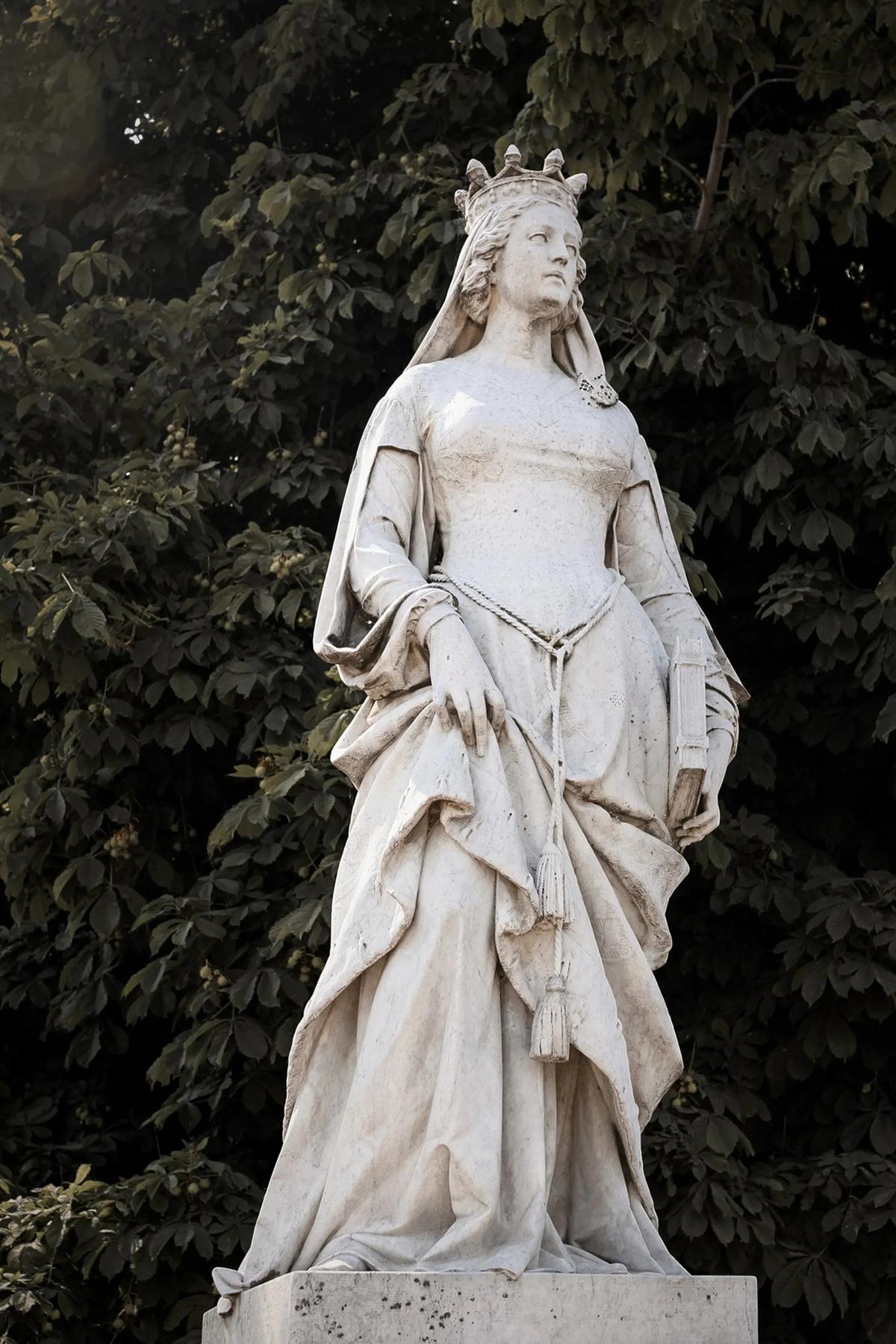
TP: I showed you those pictures of the statues that I’ve been photographing in the Tuileries, images that looked similar to yours. For your project “Notes on Presence,” was that something you stumbled upon, or was it something you already had in mind and then you saw?
NS: I went to the Luxembourg Gardens and I heard about these powerful female statues in Paris. It was research, but it was lucky research, I feel. And then I realized, Oh! there’s a series here. Let me do a series of these to accompany the texts in the book. But I also liked that they were clothed, which is rare for Paris statues.
And the text is about what it is like being an older woman, being a woman after forty, and how the society views us. This was because some years ago there was a debate on the market value on women after a certain age. And it just really, really got to me because I don’t think that you should talk about market value. And you see, more and more of this “skinny trend” has come back. All of these women ... I just think that we see too little of women being women and focusing on what they’re saying and thinking, instead of how they look. It never ceases to amaze me that we are still talking about market value. I wrote a very long, angry text about it for my master’s degree. And then I published it in that book.
TAYLOR PRINSEN is an American photographer based in Paris whose work centers on the female form. With 15 years of experience in commercial photography, she obtained her MFA from Paris College of Art to expand this research.
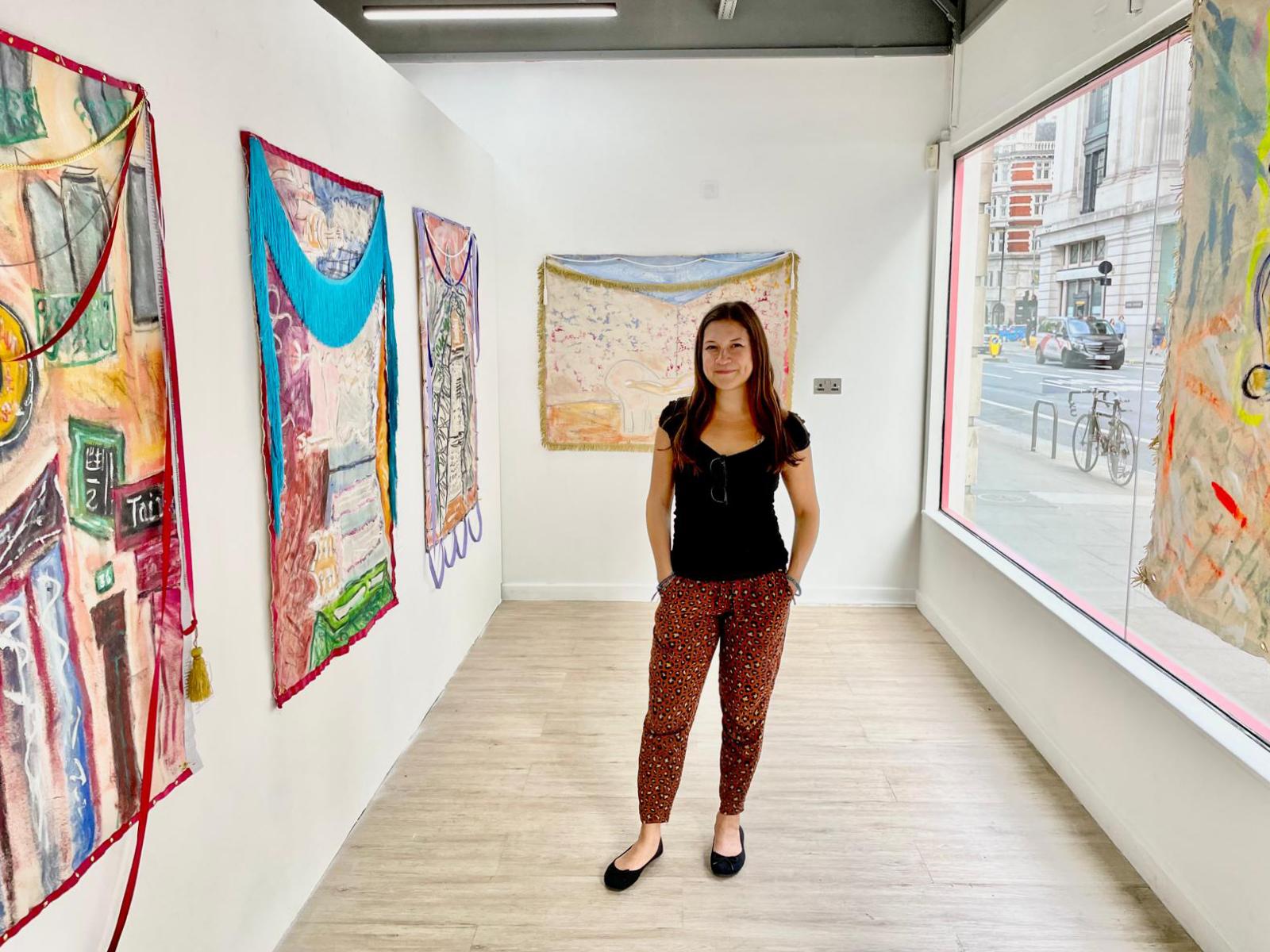
is an American artist and author based in London, where she serves as Chair of the Visual Arts Society at the Reform Club on Pall Mall. Working across painting, drawing, and found objects, her practice remains responsive to materials that spark and shape her creative process. Her writing spans poetry, short fiction, and creative nonfiction.
As I approached my interview with Dallas Athent, it began to soften into something more conversational and more transformative than I had anticipated. Our meeting on a Parisian terrace opened with a man carrying a speaker arriving in the square, gathering strangers into an impromptu dance. We watched, and spoke, as people abandoned their intended plans for the evening, surrendering instead to spontaneity and the simple pull of joy. This moment set the tone for everything that followed.
As we spoke, the structure of an “interview” quickly dissolved. Our conversation moved fluidly through questions, analogies, and storytelling, unfolding into something more expansive. Inevitably, we found ourselves returning to art and the forces that shape it.
Questions about the art world were often met with analogy and inquiry, turning back toward what is individual within it. Dallas spoke about the role of chance and intentionality in her career, offering an image that stayed with me. She described a scene from the movie Titanic, where the ship is sinking and the heavy doors of the boiler room begin to close. In that moment, a man narrowly escapes, his feet disappearing just as the doors shut behind him. Dallas saw herself in that image, in the many moments where she moved forward through a combination of luck and timing. Moving abroad, securing residency, continuing her artistic path, each step often came just in time.
Yet these moments of chance are only part of the story. She emphasized the work required to arrive at those thresholds in the first place. To board the ship, even one that may be sinking, is still to move forward. Progress does not always come in clear or stable forms, but in choosing a direction and stepping toward it. Finding a vessel, however imperfect, carries you closer to where you hope to be.
Through this perspective, the idea of a fixed future begins to dissolve. “The goalpost is always moving.” Life often resists rigid planning, and approaching it instead as an ongoing experiment, grounded in effort but open to change, becomes far more generative. To plan too tightly is to risk losing the ability to respond with play or to adapt to what emerges. When you chase so-called success which compromises your voice “you risk a life of making work for others with no reward.”
Dallas’s own experiments often move beyond the confines of the studio. In response to a creative stagnation rooted in studio-bound practice, she was encouraged to step back into the world. For her, art is a way of speaking with and about lived experience, and immersion in that experience is essential. When artists become too removed, the work can lose its connection.
She returned to early moments that first shaped her understanding of art, recalling visits to the Metropolitan Museum of Art in New York City as a child. At seven years old, she was struck by how real everything felt. In contrast, spaces like Disneyland began to register as attempts to replicate that same sense of immersion. This reflection led her back into public and lived spaces as sites of creation. Whether seated in a museum or on a park bench, she turns to her sketchbook, making blind contour drawings and color studies as a way of reconnecting.
We spoke about the distinctions between high and low art, and how value is assigned or withheld. Returning to what Dallas describes as the basics becomes a way of dissolving those hierarchies. Expression, in any form, holds weight when it sustains the individual’s creative impulse, when it keeps something alive.
Following one’s own desires allows for a more authentic trajectory, and with it, the possibility of carving something new. Reflecting on artists we admire, such as Tracey Emin, it becomes clear that their paths are not shaped by trends or market demands, but by a commitment to their own voice. As Dallas noted, no one person’s trajectory can serve as a guidebook for another. Each definition of success is personal and cannot be borrowed or imposed.
She left me with a question that continues to resonate: how do you want to spend the majority of your time?
GRACE SHIVELY is an American artist based in Paris who works across multiple mediums, with drawing at the core of her practice. She engages a personal archive to revisit formative moments and reconsider how identity takes shape over time.
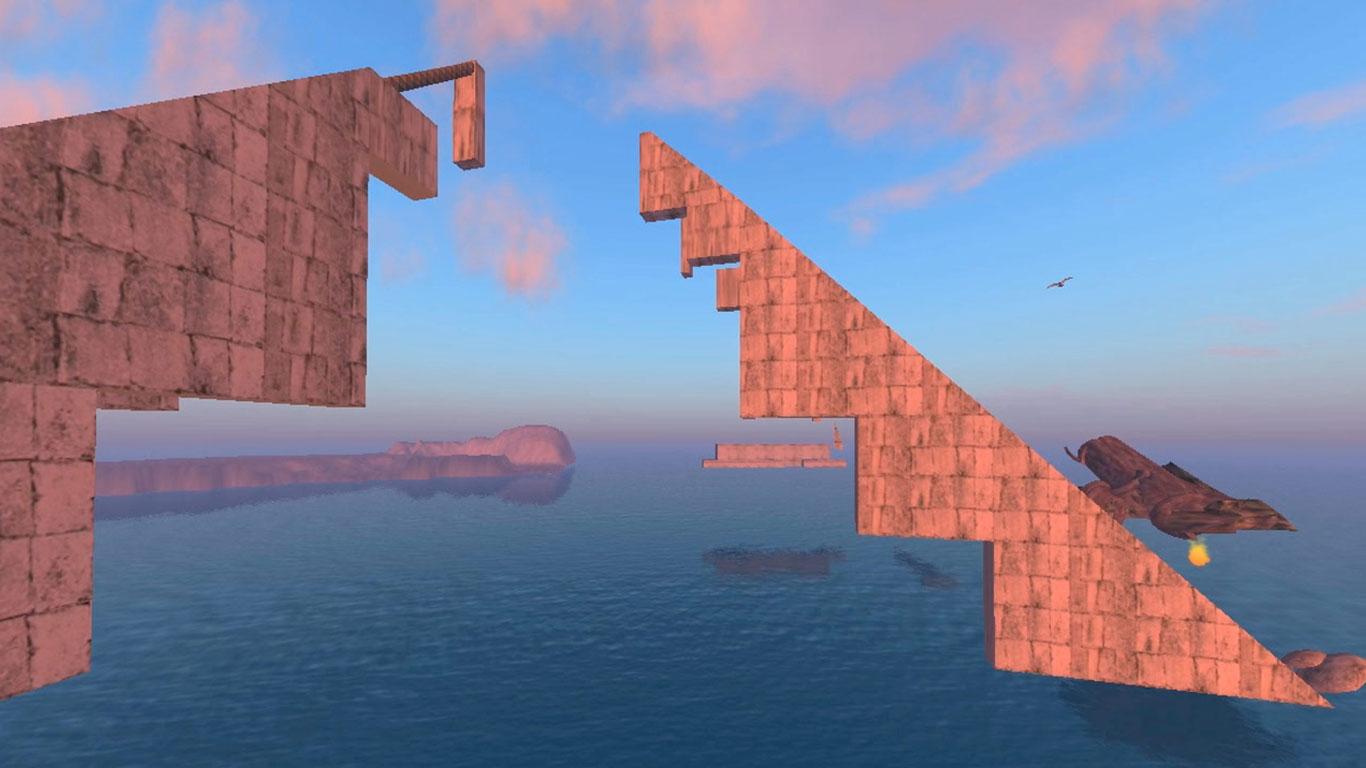
is an artist, game designer, and scholar from the United States. She is a Fairchild Distinguished Professor at Dartmouth College, founder of the women-led games company Resonym, and is currently artist in residence at NEMO in Amsterdam. Her work spans games, drawing, painting, and installation, that consistently create “critical play” interventions against the systems that shape our lives. She is the author of Critical Play and has exhibited at the Guggenheim, Tate Britain, and the Whitney Biennial, among others.
Jacob Karr: The question that I’m interested in is a problem, or at least many people call it a problem, of video games in the white cube, and I just wanted to ask if you see it as a problem? Have there been challenges placing virtual art in the white cube?
Mary Flanagan: I think now that is not an issue at all. But when I was first doing interactive things, there was a real divide because I ended up working on artwork in my twenties after I was a commercial game developer. I was bringing the professional experience of working on teams and having big budgets; I was a producer then director, so basically I managed, I birthed these games with my team, and I ended up going and working on that because when I was a grad student, digital editing tools were coming out. I was a very early adopter. I was doing interactive video on laser discs. It was really weird to do stuff in that generation, you know? But at that time there was a real “Art can’t have anything to do with commercial things.” And you know, in some professor’s eyes, I was like, tainted that I had worked in an industry. But I think that all that view has changed radically.
JK: I think there is a problem with video games in terms of which video games are in what kind of exhibition? Because when the MoMA has had these video game exhibitions, they’re all commercial games, specifically Minecraft with no intervention, just Minecraft as like this historical object. And that always made me think like, if that’s in one of the biggest museums, where does my work fit in relation to that?
MF: But then you have, a few years ago, there was, in one of the Whitney Biennials, Porpentine’s [Charity Heartscape], interactive fiction was also included. So I think that there are blurry lines.
JK: Do you feel that the genre of interactive art or digital interactive art still has something to prove or do you feel it’s pretty well established?
MF: Oh no, I think it’s pretty mainstream now. It’s hard to do for a number of reasons in gallery settings. One of which is the physical space of a gallery, the sales model attached to it and that kind of thing. But then the collectability of it and the long-term maintenance, that’s a whole conversation that is one side of the coin. But the other thing is like what gallery is set up to be able to run that? If you need a network and five iPads and a server in there, who’s starting it up in the morning? Who’s the steward of it? Those are only practical details, they’re not conceptual details.
I don’t think that there’s much of a resistance to digital work. I do think there’s resistance to AI work. Even a critical use of AI can get people to back up right now because of the concern. But I don’t think games have anything strange about them. Again it depends on if they’re like indie games for what audience. You know, are they art games?
JK: I have a more technical, professional, industry background like you, I originally studied computer science. I had a studio professor early in my MFA here at PCA tell me, “Jacob, you are talking like a developer right now.” That was really helpful for me, to flag that and to think about why am I doing this, what am I investigating, and what effect do I want to have on other people? I wondered if you had that same moment?
MF: No, because I’ve always known that I wanted to make things that I wanted to make. So I’m like, I have my ideas and I wanna make them. And, I was very excited to not make commercially for a while in order to do that. What I did have to do though, when I started writing critical theory, I had to rewrite the first article that I ever wrote probably five times because I had adopted the wrong language. I had gotten out of my academic language and I was in developer language and we don’t have to talk about the product. I had to rewrite it and rewrite it and rewrite it because I was writing about Lara Croft asking who are we when we’re playing? Lara Croft was a kind of conceptual question about that. And it was in 1997 or eight, so it was a while ago. And that was the only tension I felt was just my language, I realized I had been linguistically washed. I totally felt linguistically constrained as well.
Like I was making for myself, as you say, but then I would use this language of a developer to describe it, and it wasn’t so impactful when talking with other artists.
JK: I also want to ask about making it work, getting the bills paid. It’s something that me and my peers bring up all the time, maybe even more than previous generations. We’re framing it, especially as young artists, like it’s a constellation of things which help you make the rent, whether it’s fees from submissions to open calls, a teaching position, working part-time in an area of expertise. So I’m very interested in you, Mary, as a teaching artist, can you tell me a little bit about that?
MF: I think what you’re talking about is where is the place of art? And how do we survive, right? And it is important to note that very few artists pay the bills with their art. Probably Julie Mehretu can, or you know, Richard Serra. But like most artists who are working today, and I think it’s much harder right now to be an artist in general because of the cost of living around the world is so expensive, and when you were in SoHo in the 1960s, how much you needed to live was a very different kind of thing.
JK: I’m reminded of that whenever I watch retrospectives on YouTube of those New York artists from the sixties and I’m always astonished how they managed to secure apartments so cheaply.
MF: The cost of living really makes it even more challenging. Real estate especially, and it makes it really difficult to come up with various models, but for me, I’ve never really tried to make a business model of my art.
JK: Do you think that, I mean, just mapping it back to my life and experience, I really do see the advent of Gamergate as a real introduction for many young people into thinking and acting politically, and I think no matter where these young people ended up on the political spectrum, they’ve all been fundamentally shaped by it in some profound way. What can we learn from Gamergate?
MF: Oh, wow. I think Gamergate was like a test subject for the current manipulation of ideas. And bullying of people, politicians, I mean, you know, we have female leaders around the world stepping down because of the abuse. The thing Gamergate was, really, was a toe in the water, gauging how much damage a small group of people could do, internationally. I mean 4Chan and Gamergate, that duo, has really shown that a minority of voices can really disrupt the majority of things. Now it should help us think, oh, well if it can happen negatively, it should happen positively. But it just so happens that the people who are driven to do that are a different kind of people. It’s helpful ‘cause it’s like if a small number of people can do this and another small group of people changing in the other way. And I think sometimes, people feel overwhelmed and disempowered and don’t want to stoop to evil tactics. Right. Yeah. But I, on the other hand, I do think that activism has a lot to learn from how it has been squashed - how it’s been defeated.
JACOB MICHAEL KARR is an artist, game designer, and educator working with experimental video games and installation. He received an MFA in Transdisciplinary New Media from Paris College of Art.
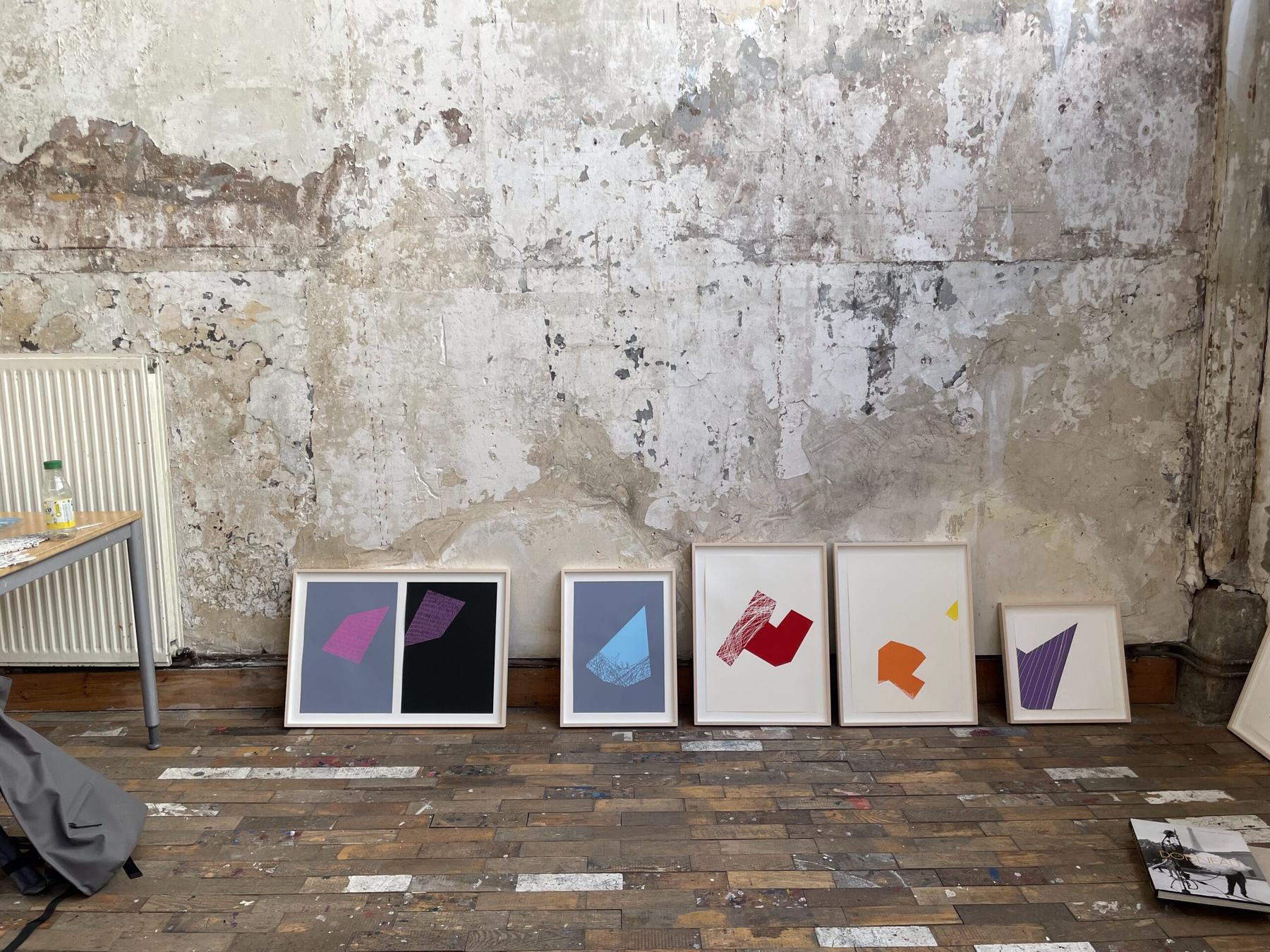
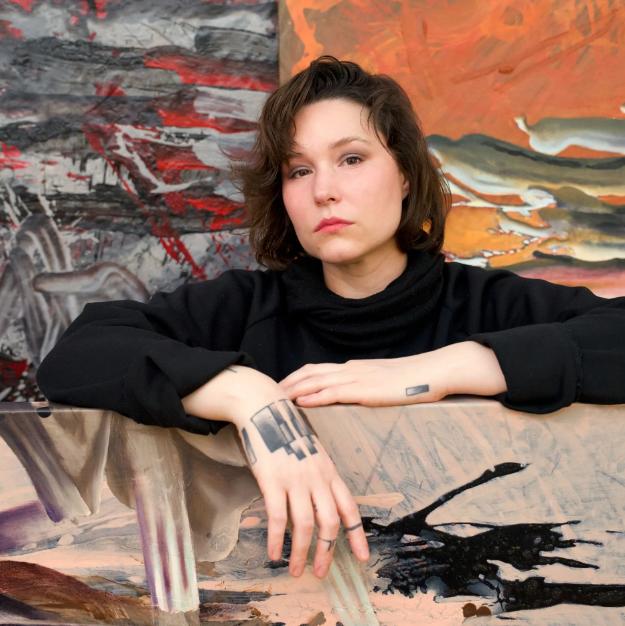
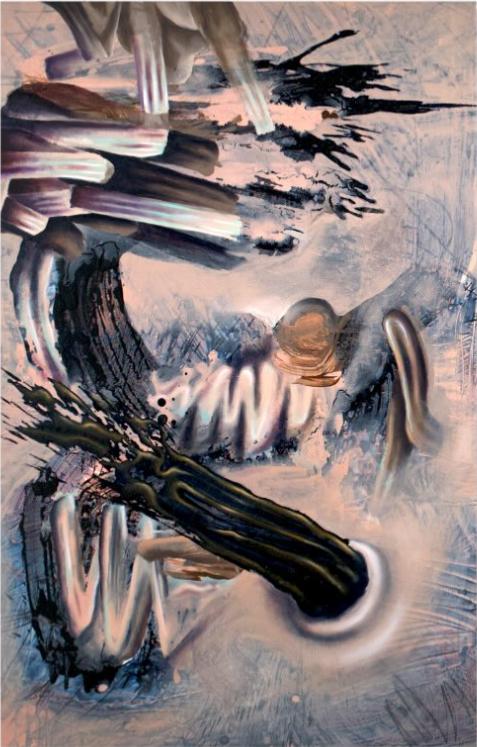
is a Franco-American artist of Venezuelan heritage working between Paris and London. A graduate of the Royal College of Art (MA Painting), she has exhibited internationally, including her 2024 solo exhibition Virtual Reverence at Elios Gallery, Paris. Her practice explores the “Abject Feminine,” moving from the body’s exterior into its interior and affective states. Through visceral landscapes and totemic figures, her paintings evoke digital sensibilities, conjuring forms that are bodily yet uncanny, unstable, and in flux.
After reading about the notorious Lala Drona on the very factual celebrity blog Based on a Fact, where one can follow her meteoric rise from a haunted breast implant to an activist stance within the #freebritney campaign via a mirror-box painting, I felt more confused than ever.
As an aspiring young artist, I was curious to learn more about the Venezuelan-American painter who, according to the internet, has been making waves in the Parisian art scene since the 2010s—or at least appears to have been. Unlike most contemporary painters I’ve been referred to by teachers and peers, Lala had a suspiciously rich online presence. The more I searched, the more questions I had. Who was Lala, really? How did she become the painter she is today? And most importantly: what did a girl have to do to get in touch?
It turns out the last question was the easiest to answer. Step one: have a mutual friend. Step two: have them arrange a rendez-vous in Lala’s at-home studio.
Lala’s studio looked exactly how you would imagine a painter’s studio to look: paint, brushes, half-finished canvases leaning casually against the walls. It also had a cozy feel to it—made you want to sit and talk for hours—or maybe that’s just because there was a couch. I was eager to hear more about her practice, especially given that my own MFA in drawing has led me toward a protocol-based approach with surprising overlaps to hers (as I had previously discovered via a sponsored Instagram reel).
In my own work, I begin with runny, gestural marks that create a kind of skeletal structure for monotype, followed by layers of ink, oil, and pastel—what I like to call a dialogue with my unconscious mind. In the reel, Lala described something strikingly similar: large gestural layers of paint applied onto a canvas laid directly on the floor, later refined to bring forward certain forms.
A negotiation between instinct and control.
Naturally, I asked how she developed this approach. Her answer, much more compelling than mine, brought us right back to the haunted breast implant.
Years ago, she explained, upon discovering that her breast implant was haunted, she made the decision to have it removed (a breast explant, if you will). Following the procedure, she obtained footage of the surgery and began watching it obsessively—studying the layers of tendon, muscle, and fat until they were effectively imprinted into her visual memory. These textures and forms began to seep into her work, sparking a desire to engage the body more directly in the act of painting.
Influenced in part by the Gutai movement, in which artists reject traditional tools in favor of direct bodily engagement, Lala moved her canvas from the wall to the floor. Scaling up in size, she began using her entire body to produce large, sweeping gestures. The floor itself began to echo the position of a surgical table—a site of both action and vulnerability.
Through repeated layering, these gestures accumulate into something like an anatomical memory: forms that sometimes recall blood, tissue, or fluid, emerging from what she describes as the unconscious. At a later stage, she returns to the work for some conscious intervention, refining, removing, and emphasizing certain elements. The result is a large, visceral painting that stages an ongoing dialogue between layers of consciousness, body, and mind.
This back-and-forth does not end with the painting itself. Lala often revisits finished works through drawing, creating iterations and re-iterations that extend the conversation with her body.
I had to ask about her influences—had to understand the muses at play in her Lala Laboratory. She pointed to Julie Decornu’s Raw, as well as films associated with the New French Extremity, including Alexandre Aja’s High Tension (2003). Most significantly, she cited David Cronenberg, whose work consistently explores bodily mutation and transformation.
She described, almost fondly, the moment in The Fly when Seth Brundle begins to realize his body is becoming something other than human. This fascination with metamorphosis—watching the body betray itself—resonates strongly with her own work. It also explains her admiration for Crimes of the Future (2022), where the body becomes a site of continuous and public transformation.
It’s not surprising, given her origin story, that Lala is drawn to imagery others might find grotesque. And yet, the appeal is familiar. I find myself equally captivated by Cronenberg’s films—uneasy, yet completely engrossed, unable to look away. There is something compelling about encountering the icky from a safe distance. Perhaps this is what I find myself drawn to in Lala’s work. It may also explain something about my own. Now may be the time to mention that all my drawings are saturated in red in a way that on the surface recalls blood and gore, hovering somewhere between abstraction and something more visceral—something that, under different circumstances, might be difficult to confront directly.
I never did find out Lala’s real name. But I did leave with something better: a clearer understanding of how her work operates, both materially and mythologically—beyond the tabloids and the paparazzi. Plus, of the three questions I arrived with, at least two were answered. Maybe someday I’ll ask our mutual friend for her name.
SIENNA PAQUAY is a Paris-based artist from Montreal working in contemporary drawing and performance. Her practice explores the intersection of meditation, hypnosis, and automatism, translating altered states of consciousness into gestural marks using pigments, pastel, and oil stick. She builds layered compositions where forms are repeatedly reworked and re-iterated, shifting between intuitive gesture and controlled intervention.
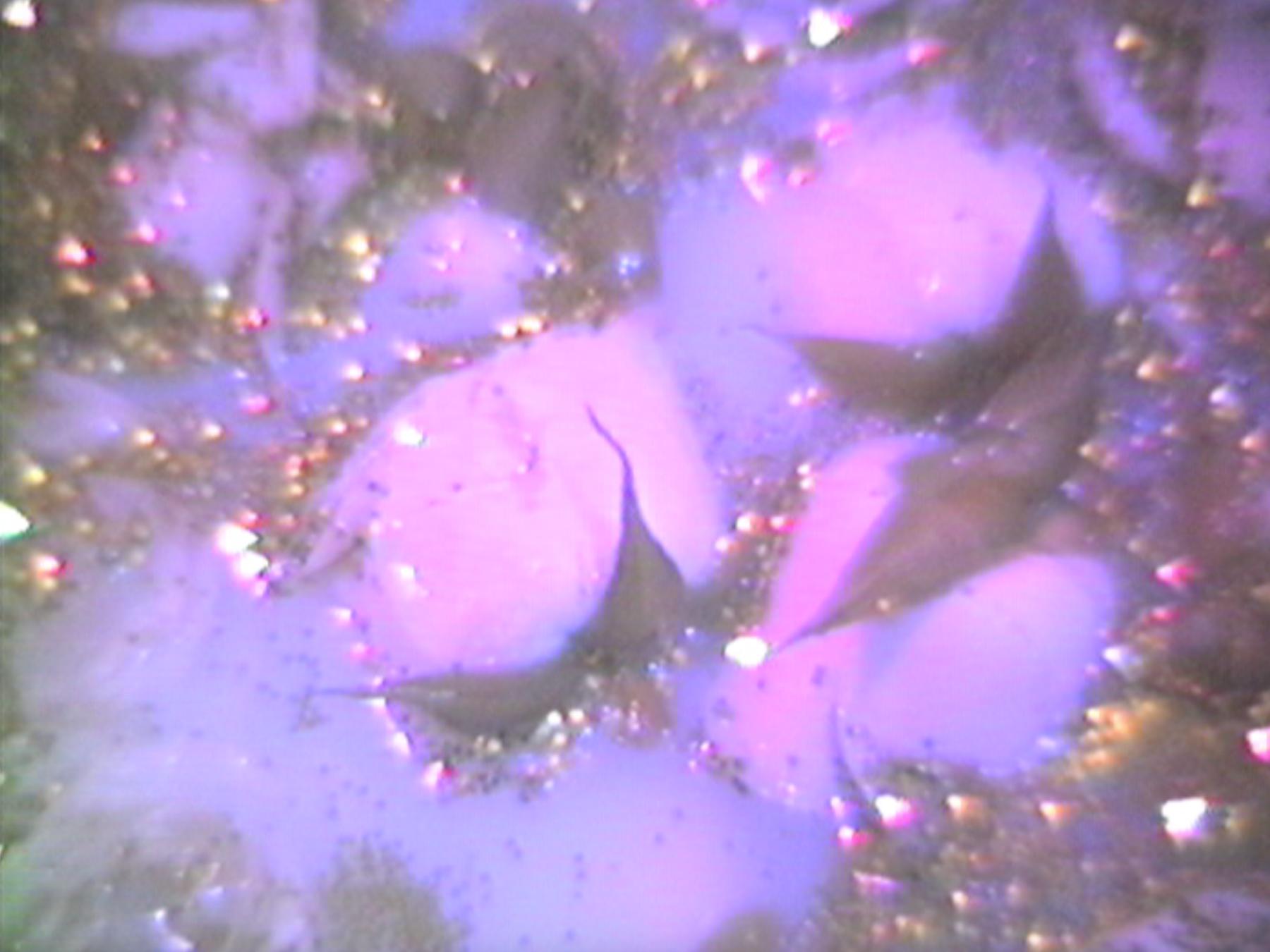
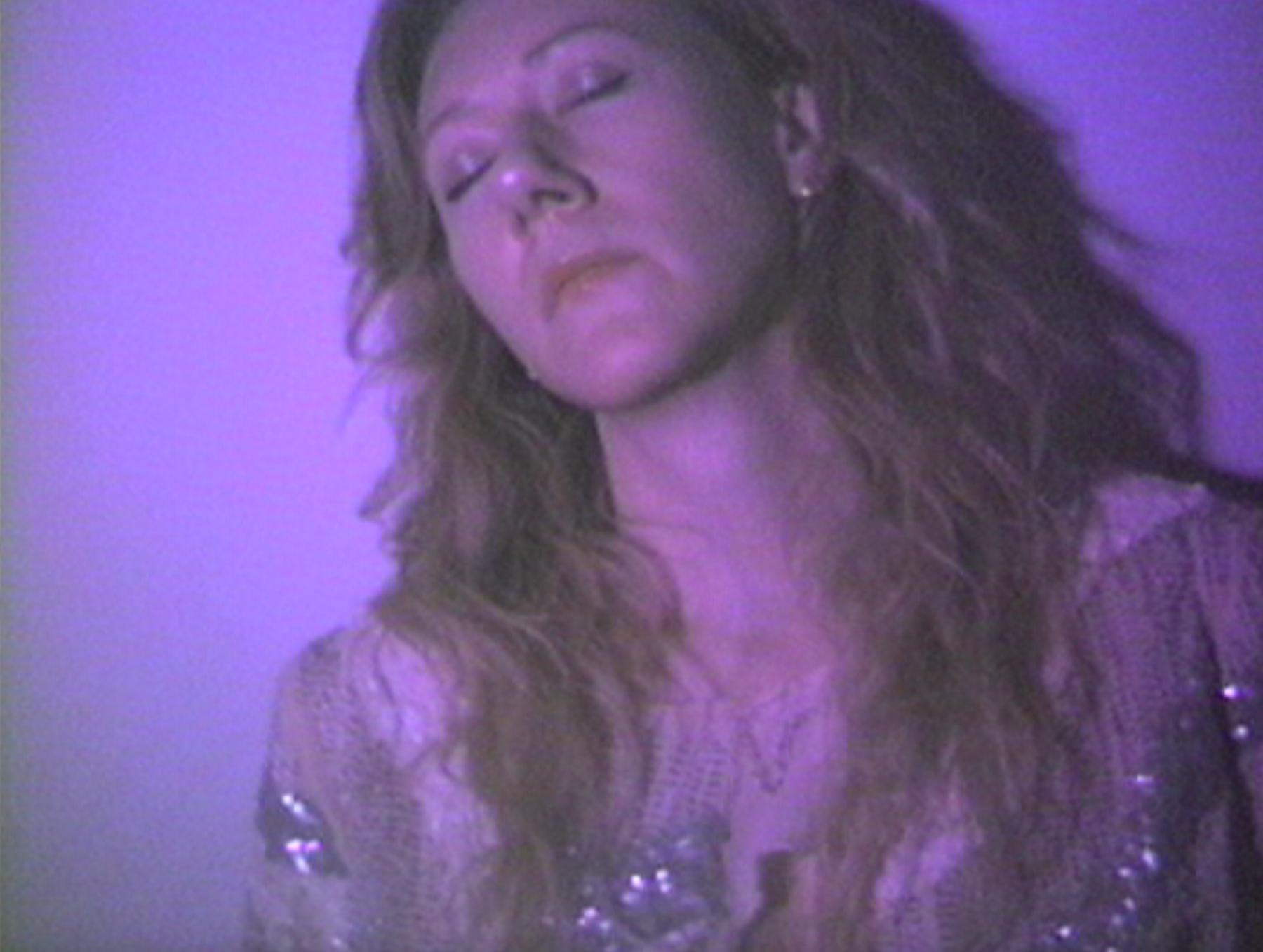
is a New York-based video artist and curator creating experimental, feminist work spanning over two decades. Her films — in which she acts as both videographer and performer — merge femininity, anarchistic themes, ritual, and sensuality through a rich visual language of recurring symbols, primarily using VHS. Her work has been exhibited internationally, including solo shows at MoMA PS1 and the
Bill Hodges Gallery. She holds a BS in Graphic Design from the Art Institute of Portland and completed a residency at the School of Visual Arts before studying performance under Marina Abramovic at MoMA PS1. She currently serves on the curatorial committee at the Millennium Film Workshop and the board of advisors at the New York Film-makers’ Cooperative.
Madeleine McHale: Do you ever feel like you need to stay a little bit detached from yourself? I find it quite difficult to insert myself into my artwork because I feel like it should have this intrinsic value without the person who’s created it.
Erica Schreiner: I feel one of the most important things I can do is be as vulnerable and as real and authentically myself as I can be. I feel like when you really go in and you find that vulnerability then that’s what makes it universal. How much are men going to relate to my videos? I’m thinking about that. I think no matter who you are, with all your specificities, if you’re finding something true, people, it’ll be theirs too.
MM: How do you think about creating “unpalatable” art?
ES: I really enjoy being unpalatable. You know, in this world everything is so palatable and it’s boring and it’s just so quantified and commercialized and you know my favorite stuff is stuff that upsets people or is edgy or if you if you can get a reaction of disgust that’s amazing. I have videos where I’m licking menstrual blood off my hands or eating the butterflies. Those two [films] really upset people. People will walk out of them and when it happens, I just feel so much—I don’t know what you would say—pride or satisfaction.
MM: Are you more ‘I don’t know how it’s going to end’ and then you start the filming? Or by the time you put yourself in front of the camera, you know what’s going to happen? How orchestrated is it?
ES: It has changed. When I was doing the project with pink hair, I would just have an idea, and I would turn on the camera and then go where it went and film it all in one take. And then the films after that, I started to really write an outline and was very methodical and precise. Like some of the videos, even though it’s with symbols, there’s such clear storytelling.
And now, I’m doing something kind of like that, but a bit looser. Where I’ll have this idea and this inspiration and I’ll think “I’m going to shoot this.” But I let myself take three months to make a video; I’m not rushing it. If after I film a scene or two, and something new happens in my life to that experience that I am trying to portray, then I’ll film a new unexpected thing. I let the process of making it inform the experience and the experience inform the video. It’s very circular.
MM: Do you feel like you’re a different character in your films, or do you really feel like it’s a mirror to yourself?
ES: I feel like it’s me. It’s like the deepest, truest part of me. But in every video, there’s a different me. One of the things I want to convey with the whole body of work is that we are all this complex. Like, I’m not just Erica here having a conversation, being a normal person, you know, but there’s all this other stuff. I feel like when I make the videos, its more… of a soul reflection, you know? And I’m trying to find this deep ethereal beauty that might not be everyday Erica, you know?
MM: Do you think that’s the goal in your artwork? Vulnerability?
ES: Yeah. There are a lot of goals. Vulnerability is a big goal. Another goal is making art as a woman. It feels important to me to age naturally and show the whole life of a woman, and not in some kind of preserved, perfect way. I think those films where I’m younger are going to mean more when I’m older, and you have this thing to compare it to. But when you’re just 20 and cute and you’re making films about yourself, it doesn’t hold a lot of depth, you know? And so, another goal is for people to see the work and think “I can make art too.” I really want to inspire people to make their own art.
MM: Do you consider the female/male gaze when you make your films?
ES: I’m turning the camera on myself. This is how I’m choosing to see myself; this is how I’m choosing to portray myself. Every bit of this that you’re seeing is my choice: the editing, the lighting, the camera, the performance. This is the female gaze, and I just am completely owning the image. I have my own unfortunate patriarchal conditioning. I might be looking through my own lens, but it doesn’t wipe that clean. I’m still a part of the society I grew up in. So that’s still in there. I catch myself in that sometimes where I’m like “there really is a third person like perspective.” I don’t know why that’s such a shocking feeling sometimes, but I’m like, wow, people are really seeing me as a woman.
MM: Is that how you view your practice, this world building experience?
ES: Yeah. I have this world and I have to figure it out, as I’m conceptualizing a new video, what can live in that world. I know, for instance, I will shoot it on VHS. That’s a part of that world. I have all my regular symbols. And then I started thinking, I really want to shake things up and add a new symbol, a symbol that isn’t so feminine. Instead of a butterfly or a piece of fruit, I decided—and it just arrived today actually—I wanted to use rope as a new symbol. I bought this huge rope, the rope itself is like two inches thick and it’s heavy. I don’t totally know where I’m going to go with this, but I want to carry it around. It’s endless what rope could mean ... I keep writing “carry the ropes.” Because you’re carrying what ties you down, in a sense. That’s how I think about it. Depending on how you swing it, it can be positive or negative, or a burden or a release. It can tie you up, but it can also tie one thing to another thing. I’m only at the very beginning of understanding ropes.
MADELEINE MCHALE is a Paris-based multi-media artist whose practice explores the limits and boundaries of the body through sculpture, drawing, and installation. Drawing on a technical anatomy background, her work decodes the systems of the human figure to question how we define and qualify “body.” She completed her BA in Business Administration at Northeastern University in 2024 before pursuing formal art studies at Paris College of Art.
is a curator, art advisor, writer and cultural mediator based in Paris. Since completing her master’s thesis at IESA Art & Culture (2023) in Paris, she has been passionate about exploring cross-cultural dialogues and sustainable approaches within contemporary art.
On the journey of Starting TAK Contemporary: TAK Contemporary started in 2023. Pranitha Joseph and I met during our Master’s in Contemporary Art at IESA. I later met Shubhankar Bharti when he and Pranitha were working at 193 Gallery and the three of us became friends.
We had noticed a lack in the representation of emerging South Asian artists in the Parisian art world. Historically, many Indian artisans had lived and worked in Paris, so there was already a precedent for cultural exchange. The idea came about between Shubhankar and Pranitha while I was in India. I got a call from them and we spoke about creating something that addressed this gap. That’s how TAK Contemporary was formed.
From the beginning, the idea was to bring South Asian artists to Paris and Europe while also introducing European artists in India. The aim is not to be India-centric, but to create spaces for contemporary voices across the broader South Asian region, acknowledging their interconnected histories. Since our first show in India, we’ve always mixed Indian and international artists. TAK Contemporary has been running for about two years as an initiative.
We are not looking at art that is decorative. Form is never neutral. It needs context and should ideally engage with social or political questions. At the same time, we pay attention to aesthetics and technique, as that’s what draws people. Our curatorial choices are also often guided by intuition and shared interests as curators. We are also interested in anthropology, sociology, and psychology.
Within TAK Contemporary, the three of us also come from different backgrounds, which means we interpret artworks differently. However, we often find ourselves drawn to themes such as inequality and history. The themes we have been exploring so far include displacement, the caste system, ecological concerns, and broader political frameworks within which artworks are created. In our exhibition “Mango Man: Allegories of Political Propositions,” in collaboration with 193 Gallery in Paris, Salik Ansari’s work addressed the bulldozer demolitions affecting minority communities in India, while K. G. Babu explored the impact of development on Adivasi communities.
When it comes to the question of a starting point, sometimes an artist is already in the picture and we build a concept around their work, while at other times an exhibition begins with a specific title or concept. The title of our show that opened on the 9th of April 2026, “Ceci n’est pas un paysage,” is inspired by Renée Magritte’s Ceci n’est pas une pipe. It explores the idea of land as not just a passive backdrop but as something that carries stories of the people connected to it.
There have also been instances of artists who put their trust in us and let us hold on to their work in Paris, in case an opportunity to exhibit comes up. These relationships make the work quite personal for us.
Collaborating with galleries, participating in art fairs, doing institutional exhibitions, and projects in third spaces beyond traditional white-cube galleries are some different curatorial formats. Talks and performances at exhibitions are also para-curatorial activities. To collaborate we approach established galleries whose programmes may lack South Asian voices and propose artists who could fit within their curatorial direction. For “Mango Man: Allegories of Political Propositions,” we collaborated with 193 Gallery, presenting seven artists; following the exhibition they began working with Pavan Kavitar and may collaborate again with Sumakshi Singh, whom we also represented at Asia Now. This kind of collaboration helps create long-term impact if galleries begin representing the artists we introduce.
Our first institutional show, “Architecture of Remembering” was organised with Alliance Française Trivandrum and Alliance Française Chandigarh. The duo show presented French artist Philippe Calia and Indian artist Supriyo Manna. It examined how histories and lived experiences are inscribed within physical sites, objects, and structures, and how these spaces allow communities to engage with, preserve, and inhabit memory across individual and collective life.
The third spaces we’ve worked with include Deeya Paris, a boutique founded by Marielou Phillips and Matthieu Foss, where we exhibited five artists in their gallery space. In designer Mohanjeet’s boutique, we curated the exhibition in dialogue with her collection. Our first such show took place at Dissident Club, a cultural bar founded by Pakistani journalist Taha Siddiqui, where we installed works by Salik Ansari and organised a discussion and Housie game during the opening.
At “Ce qui se trame” which took place at Moblier Nationale we moderated a talk with artists Pauline Guerrier, Antonin Mongin, Debashish Paul, who had completed their residency at Villa Swagatam in India. During “Mango Man: Allegories of Political Propositions,” we hosted a discussion on the Indian art market featuring Salomé Zelic from Galerie Continua, Fabrice Bousteau, the editor-in-chief of Beaux Arts Magazine, and journalist Rafael Pic.
One major challenge is building a network of collectors and press, which takes time as we have only been active for two years. Budget constraints are another challenge, as exhibitions with established artists often require financial support to be realised properly. At the moment, all three of us balance TAK Contemporary alongside other professional commitments, and being able to work on it full time would allow it to grow much faster. Another challenge is ensuring that our curatorial voice remains authentic and not repetitive. We need feedback from audiences to understand how our exhibitions are being interpreted.
VAISHNAVI SOSE is an Indian artist who explores the act of remembering as a way of accessing emotional and sensory experience. She is interested in the relationship between perception and memory.
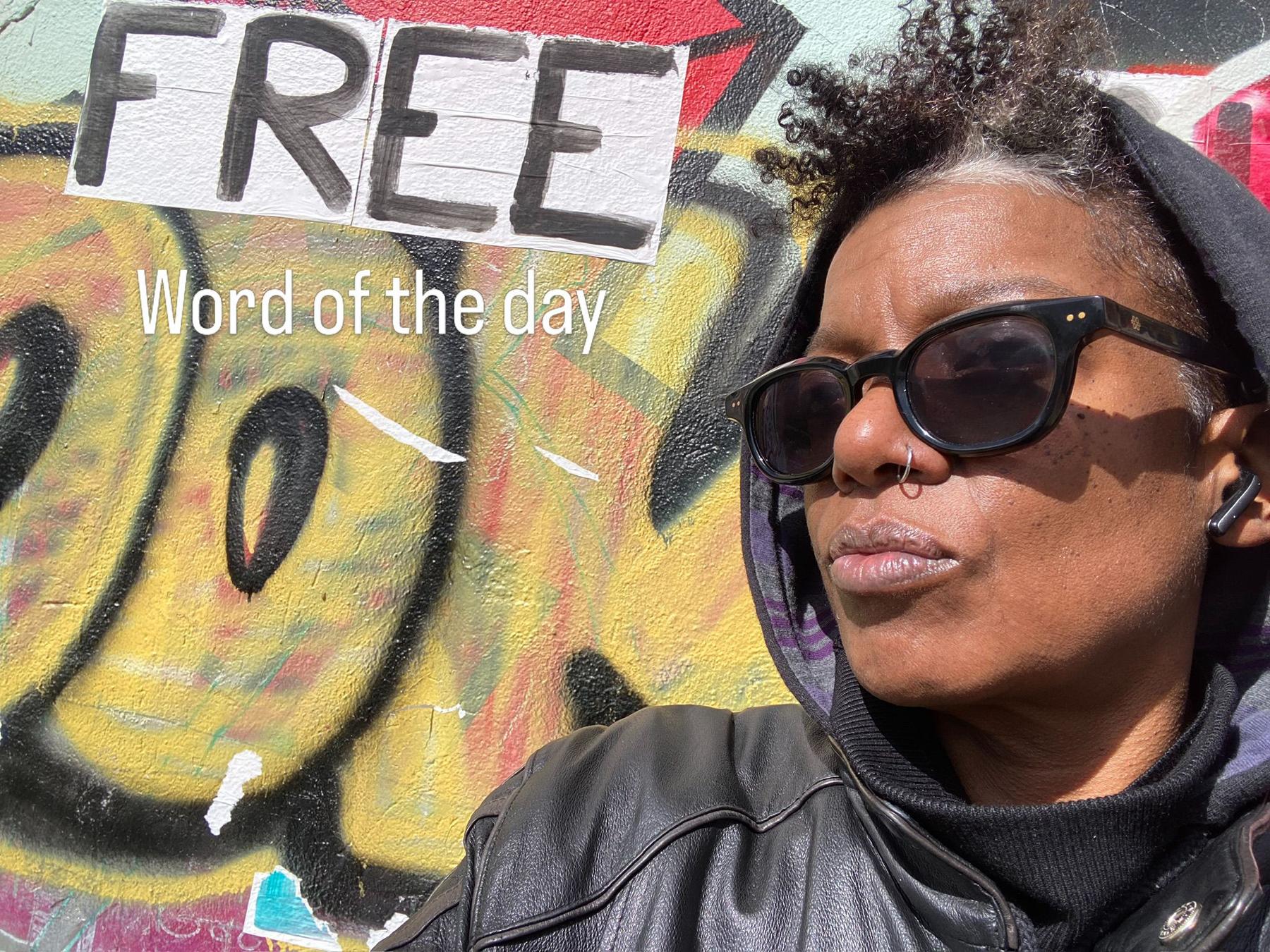
Combining text, abstraction, and sound, Ajalon creates layered works in which language is often fragmented, obscured, or dissolved. Her work spans exhibitions, performances, and publications, engaging with themes of displacement, gender, and the Black diasporic experience through an experimental,
process-driven approach.
Jamika Ajalon: My work is always a bit of a continuation of a sentence. I’m finishing my second novel, revising it. I’m working on a show at the Picasso Museum. I’m in the middle of trying to decide a set list, destroying that set list, starting again, giving myself challenges—learning new equipment, new mixer, new machine. I don’t know why I do that. I think I like to drive myself crazy.
I’ve got other shows coming up—anti-lectures in Berlin, sound work for dancers, performing with noise artists, a group exhibition/show at Raven Row called “Black Quantum Futurism.” That’s basically what I’m doing in terms of if I was to spew off a to-do list. It comes in waves: lots of things going on, then nothing going on.
This type of life is ups and downs. I feel like I’m at a pivotal point because things are starting to align more with where I am at this moment. It’s a freeing spot, but at the same time it’s scary. The thing about people who center their work around the marketplace is that once they find their niche, then you’re in a gilded cage. There’s no space to grow unless you just want to reproduce and replicate for the commodification machine. And it’s scary because if they like what you did in the past, that’s what they’re going to be expecting.
Mercedes Loyd: So, when you say when you find your niche you’re kind of locked in this cage, how do you … you’ve found a way to free yourself by doing so many things ...
JA: I’m a writer at base, always have been. But I think it’s a process, the more that you work the more you learn to trust your process. And if I’m completely honest, even if I’ve been doing my work for decades, sometimes it’s difficult to quiet that brain that says “you should be doing this, why are you not doing that? Do you even know what the fuck you’re doing?”
Part of the reason why I’m interdisciplinary is because I felt that the niches and the binaries are constraints that we made up. There are things I can’t express with words that can be expressed through visuals or sound. I felt an interconnection between those in terms of being a storyteller. It was a heartfelt calling, it also reflected a political and philosophical way of seeing and breaking those “boxes,” because everything becomes commodified it seems. But that was the initial thing and still is the initial thing—blurring the division between this, that, and the other, because it’s all coming from the same source. Being a poet, in my book, doesn’t necessarily mean that you write poetry.
ML: What’s your relationship with surveillance?
JA: I’m into disrupting these systems of reality that are force fed. Surveillance culture right now is intertwined with capitalism and it’s also a way of fixing us into place. And this fixity is just really a placeholder so we all believe “oh that’s just the way it is.” And that is what it is designed to do. Because there’s no way that one can control billions of people. It’s a thing of feeling always paranoid and scared, operation fear. However, it’s really scary because people are very connected to and invested into what these systems have forced them to do, and so it becomes self-defining. You become someone who is surveilling yourself and projecting that vision onto others.
ML: What’s your relationship with social media?
JA: There was a time in my life where I would be really hard on myself because I wasn’t very good at it … but a website is necessary, it’s necessary to have a place for people to look at your shit. Instagram is becoming more and more just a pain in my head because the algorithms are more and more commercial based and it’s not community based anymore.
It becomes comparison, seeing what other people are doing. What capitalism breeds is “oh, they’re doing that… and what am I doing? My shit is just as good as theirs, and why not?” And then you end up in a kind of cycle of depression that kills your creativity. So, I think it can be useful if you develop a healthy way of engaging, but it’s a trap. It’s kind of like when you’re addicted to drugs and you go “you know what, I’ll just binge drink on the weekends.” It’s a hard balance. It’s not sustainable. I use it as a tool, but not something that defines me.
ML: When working between different countries, how did you deal with that practically?
JA: There are a lot of things I probably could have taken more advantage of. But it is all about developing a sense of self-worth, what you’re worth. It’s such a sham anyway, it’s like, “I am worth monetarily…” I really don’t like that as a definer because then when you’re broke, that means you’re a piece of shit.
It’s been up and down financially. Sometimes I get enough money to travel comfortably and do the work comfortably, other times not. And I think it’s okay to just go for it, you know, and not make money the center. I mean, I’ve done some stuff that was not paid enough, because of who I’d be working with, or because of the challenge it might present me.
Now, I do grant writing all the time. I’m co-artistic Director at X Collective X and we work together to find funding. I also do it for myself, and I get about one out of a thousand. I’m exaggerating a little bit but it’s like playing the lottery. Researching who they are, who they funded in the past, but the most important thing is does it align with what I want to do?
The most tiring part is moving your equipment and setting it up. That can be such a drag, taking the train with your heavy bags. And as I’ve gotten older there are certain things I won’t do anymore because I want to work smarter and not so hard. You really have to take care of your nervous system and the source where that creative pulse comes from.
ML: Your work is so aligned with you, its raw, like a reflection of your actual self, but you’ve found a way to make everything work and do cool things in places with people.
JA: I’m honest to my own demise to a certain degree but sometimes I forget to look back, and when I look back, I’ve had the opportunity to do some really crazy, amazing shit. But sometimes it’s hard because I’m not internationally well known, with the stability and support that can give you. And even though I’ve had these things there’s always that forever emerging moment and you have to start creating your own ideas of what success means.
For me, the fact that I’ve been able to center my art for decades is an amazing thing. I think it’s important to take risks and do the shit that may not work. Often the failures and the mistakes are opportunities to learn. Sometimes they are the genius. Letting go to that is one of the biggest skills that one can learn as a person moving through this world, definitively as a creative.
Mercedes Loyd works and lives in Paris, and her artistic practice is based on drawing, painting, video, and installation. Grounded in sustained research and critical reading, her practice moves through material experimentation to trace how networks of authority take form and reproduce across scales.
is a Paris/New York–based artist working across painting, sculpture, film, performance, and artist’s books. She studied European Studies at Amherst College, continued at the École Normale Supérieure in Paris, and trained at the New York Studio School. Her work has been exhibited internationally in New York, Los Angeles, Berlin, and Paris, and engages in dialogue with thinkers including Jacques Derrida and Jean-Luc Nancy. Her films have screened at festivals in Paris and her artist’s books circulate in notable European collections. She is also the founder of THE SALONISTAS, a Paris-based collective launched in 2015 supporting women artists, critics, and writers. She performs and lectures widely across philosophy, psychoanalysis, and contemporary art.
The sunny Sunday turned gray, yet Paris maintained its charm. It’s a confusing thing about the City of Light. Even in its dreary climate, something illuminates its space. Rebecca Dolinsky is a fitting portrait for just why: the city has long drawn artists, writers, and filmmakers and “Paris” radiates from those who arrive.
It’s fitting that we’re here. Americans in Paris are a pest that the French can’t shake. Rebecca is from a generation that arrived with some direct connection to France–an art obsession, a scholarship, or the understanding and appreciation that French was still the lingua franca in Paris. The recent arrivals, myself included, are perhaps new, vague additions to this city. We speak French poorly, but we know what the city offers even to the lazy among us.
Rebecca’s reason for being in Paris was not vague at all. She was writing her undergraduate thesis at Amherst College on American expatriation. When she was 20, she came to Paris to interview American artists, writers, and filmmakers. While finishing her thesis in the States, James Baldwin was visiting the five college area of Massachusetts. “He spoke the way he wrote. He was so erudite,” Dolinsky said about his lectures. Fittingly, the young scholar was remembered by Baldwin when they crossed paths in New York. Shortly thereafter, she would continue the American tradition of expatriating to France. She left the US to study at the Ecole Normale Supérieure, famously associated with Simone de Beauvoir and Jean-Paul Sartre. Her arrival to France was charged with literary and philosophical giants. The art would follow.
Just a few days before our meeting, professor and writer Lillian Davies was describing Art Paris to her students. Standing beneath the architectural immensity of the Grand Palais, among the serpentine flow of trend-wearing art-viewers, Lillian paused and remarked, “Ah, there’s Rebecca.” Rebecca Dolinsky enters a place, immense may it be, and she’s noticeable–not just for her springy curls or energetic polyglot articulation. She’s a sort of beacon or guide in the labyrinth of an artist’s life.
As she and I sat in the garden of the Bibliothèque Nationale a few days later, I interviewed her, in a way, seeking her guidance. She explained how Walter Benjamin would come to that very place to transcribe entire passages of books. Perhaps that’s why he later wrote, “Objects are to ideas as constellations are to stars.” While sitting in the Salle Ovale, you are surrounded by myriad ideas represented by words and images of objects all housed in books. Rebecca sees this way as well. Many of her works begin with reading. Many involve writing. The quest to pinpoint an idea through words is amplified as it’s pursued through other languages. Rebecca describes “language as the gateway.”
For this reason, her art and writing often intersect in the artist book. Sometimes miniature, oftentimes transportable, they are the well-suited embodiment of her ideas. Words have an extra power to articulate. Art that includes them is doubly challenged to use its material well. Sometimes, artists are not so conscious of why they are doing something and it takes time to parse it out. Although, the same happens with writers. James Joyce famously took seventeen years to write Finnegan’s Wake (which he is claimed to have said that readers should take just as long to read). Dolinsky finds inspiration in these thinkers, and so, she began creating works like her Circular Library.
She cited Joyce: “Finnegan begin again. Begin again, Finnegan.” For Dolinsky, the ideas come from seemingly everywhere, modern literature as well as ancient Greek culture. Her artist book The Iyunx functions like a yoyo with a ceramic center piece and text on a ribbon wrapped around it. It evokes an ancient Greek magic where women would use these objects with incantations to summon their lovers. Dolinsky combines literature, mythology, and magic. And in turn, she produces these objects that are a marriage of form and function. Her ability to condense decades of research, writing, and thinking into an object is stunning. To her, it’s evident. “Circularity is ever-present in literature,” she said. “So, I started making these circular books.”
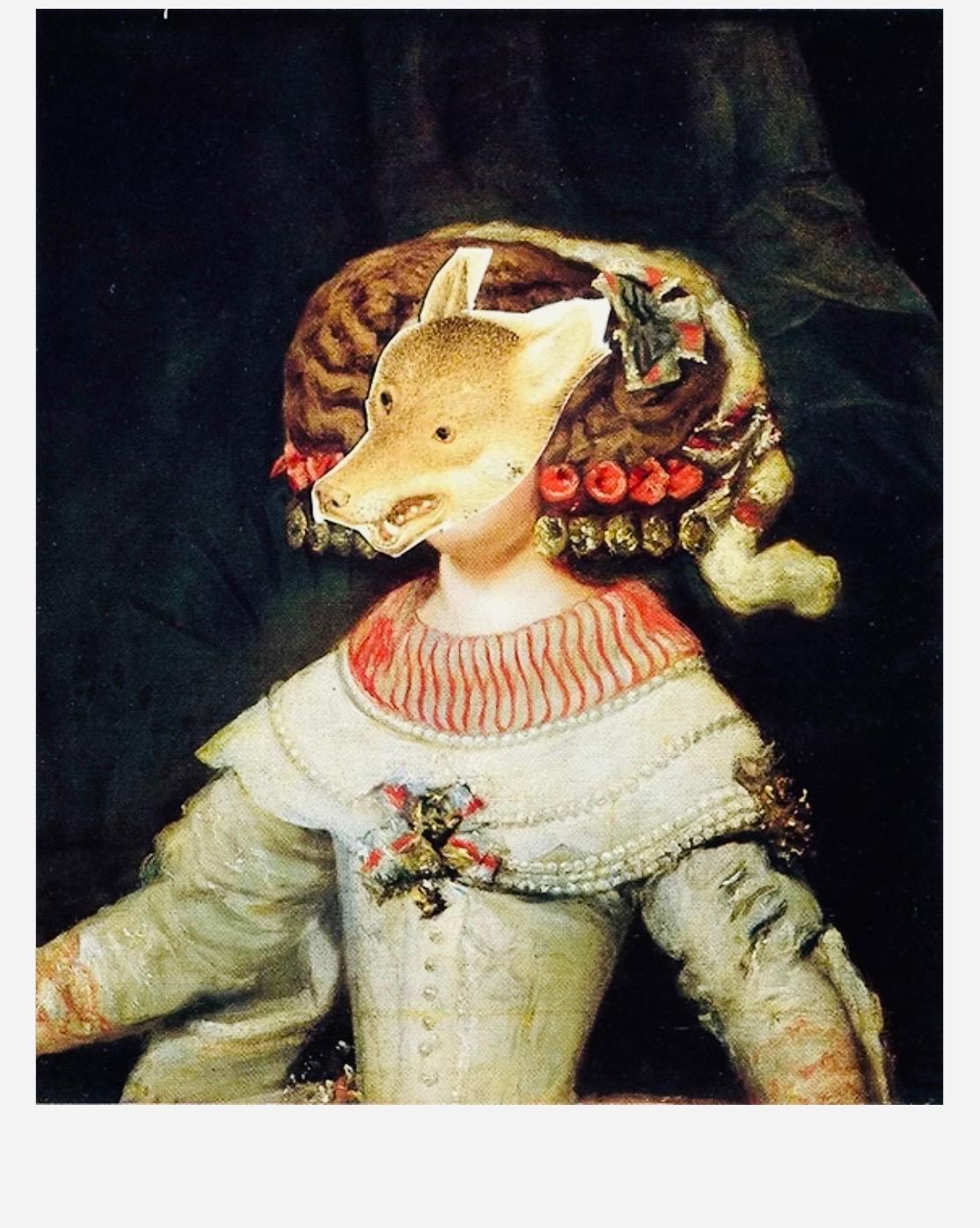
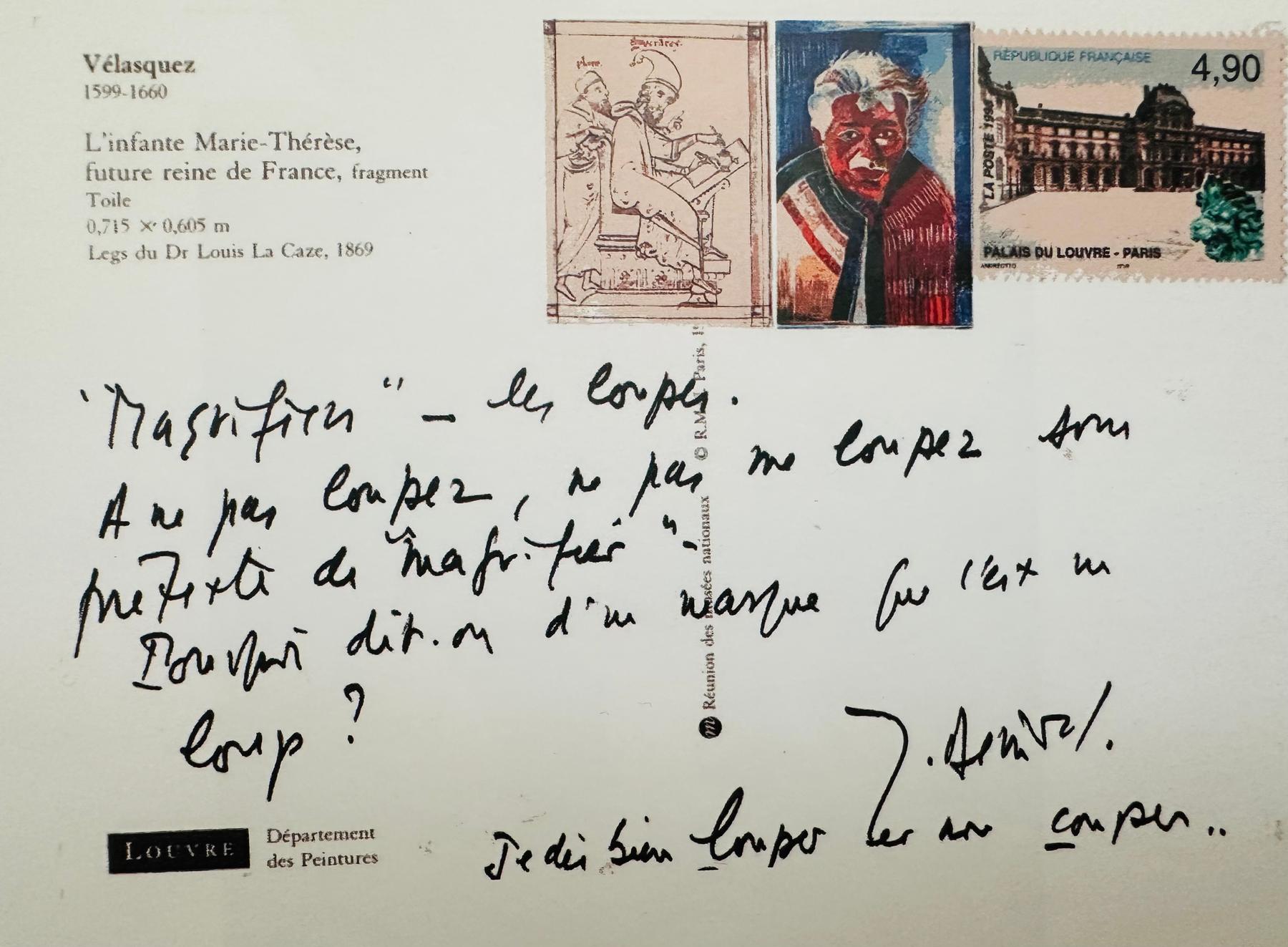
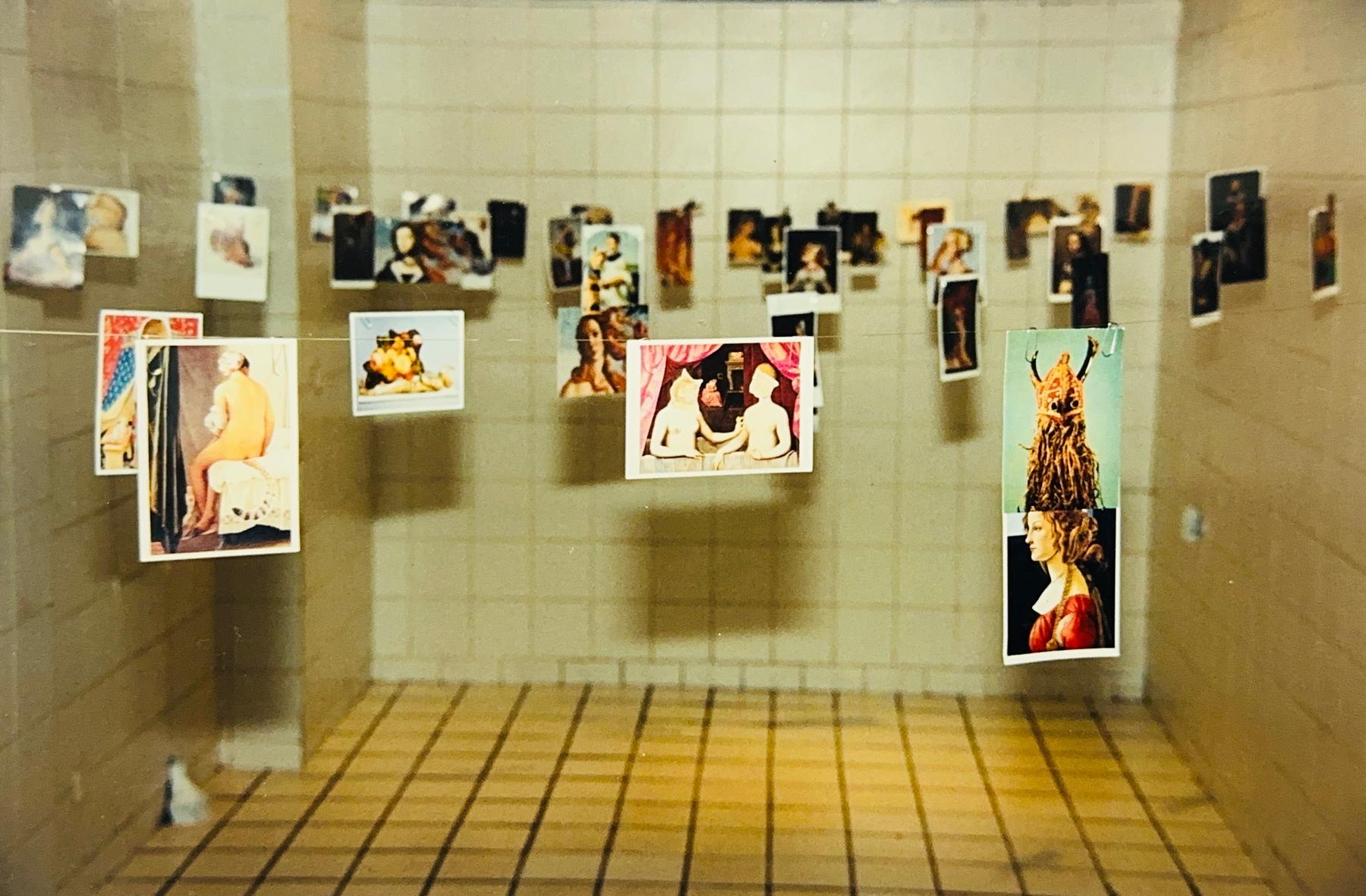
Before she was making artist books, Rebecca Dolinsky painted a lot of portraits. However, the portraits weren’t a far reach from the complexity of the circular books. In fact, they sometimes become artist books themselves (as witnessed in her commentary on Walter Benjamin’s “Art in the Age of Mechanical Reproduction” where she painted a portrait of him that she reproduced and stacked dozens of copies). An early subject of her portrait painting was philosopher Jacques Derrida. Dolinsky’s words and writing had led her to Paris. And ultimately, they led her to Derrida. She had a fellowship at the Ecole Normale Supérieure while Derrida was teaching there. By that time, he was an established voice in continental philosophy and the father of deconstruction. Rebecca was writing critically and developing her practice through language. After completing her studies at the Ecole Normale Supérieure, she was 22 and had been working under Derrida. “I painted a large portrait [of Derrida],” she said. The painting “got smaller over time and ended up being a postage stamp on a postcard.” The stamp would become a part of her project ‘je possède LE LOUVRE.’ She collected postcards from the Louvre of classic paintings and collaged them. They were “deconstructions of important paintings,” as she described them. She then sent the postcards to friends and scholars, among them Jacques Derrida and Georges Didi-Huberman. These recipients added a text on the other side and sent it back. There’s an explicit textual and visual conversation, and in a sly, understated way, Rebecca describes them as deconstructions. Always true to the text, I suppose.
When asked about her inspiration, she doesn’t deflect, but she seems to be drawing on so much that it’s not a simple answer. In her casual affect, she opines: “Sometimes it’s a little political; sometimes it’s a little feminist; ultimately it’s about bringing people together.” In a Parisian anti-Trump manifestation, her work, Aux Grandes Femmes la Matrie Reconnaissante, is testament to this belief. By archiving black and white portraits of historical feminists, she made posters for the march: one side the portrait, the other side text. The faces of the women said enough, but perhaps for Dolinsky as with Benjamin, the image is a star that exists alongside the words in the constellations of feminist history. And despite the fact that Trump has led the US into a post-truth, post-fact era, he still wildly uses both to sway the masses. Maybe Dolinsky elects to fight fire with fire, albeit more refined.
Rebecca is learning Italian. It’s her latest gateway to more inspiration. She sometimes reads bilingual Italian/French works: “That is transporting also. It’s another optic.” Through language, she’s able to newly experience Italian theater and opera works. And thanks to Paris, she has access to things like these language classes. Perhaps, the city’s multicultural community and its network of artists is the light we’re seeing. “It’s one of the reasons I love my life here,” Dolinsky says. For those of us lucky enough to experience it in person, Paris puts us near these people, places, and ideas. Otherwise, we can still access them in books. Rebecca Dolinsky provides a model for the artist anywhere seeking inspiration: “I tend to go to the studio; I read and I find something.”
GRESHAM CASH is a transdisciplinary artist and filmmaker who investigates how mediated environments shape cognition and daily experience. As a producer, composer, and sound editor, he has won awards and screened films at festivals across the U.S. and Europe, and has toured nationally with various music groups. His fiction and essays have been published in the U.S. and UK. Holding bachelor’s and master’s degrees in wildlife biology from the University of Georgia, he integrates ecological research into his practice.
is an illustrator, educator, and social anthropologist based in Mumbai, India. After completing her master’s degree, she briefly pursued academia before shifting toward visual storytelling, drawn to picture books over research writing. She studied illustration at Riyaaz Academy of Illustrators (2019-20), and has since been developing a practice rooted in observation and everyday narratives. With a background in Social Anthropology, her work is shaped by a close reading of the human world and a deep appreciation for nature. She works across traditional media including watercolor, ink, gouache, pencil, and acrylics, as well as digital raster techniques. An avid nature journaler and urban sketcher, her illustrations often reflect this intersection of people, place, and environment. Sefi has illustrated books and products for a range of clients, alongside her own independent brand, Summer Scribbles. In addition to her studio practice, she conducts art and craft workshops and serves as an ethnography mentor at a design school.
There is perhaps a moment in every artist’s life where they tell themselves, “I am going to become an artist.” For some of those artists, that moment is usually followed by wondering, “But where do I start?” For me, the answer came from Sefi George, an illustrator who seemed to have successfully cracked the code for becoming what I want to become, and who was happy to share her insights when I reached out with my questions.
George is an Indian illustrator with a background in social anthropology. Knowing that at some point, she turned to illustration made me feel that perhaps I could do the same. But when does something like art turn from a simple hobby into a serious profession?
As a child, Sefi says she was always drawing, but came to illustration through her background in social anthropology. She often felt frustrated with how research was communicated in her studies – through dense, jargon-heavy papers that were inaccessible to the very people they were about. It is limiting when knowledge cannot be easily reached or understood by a wider audience. Sefi began seeing visuals as a bridge to that gap. Many of her assignments turned into comics or illustrated narratives, and that is where she first realised that illustrations could be a legitimate way of practising anthropology, not just for documenting, but also for sharing insights in an accessible and engaging way.
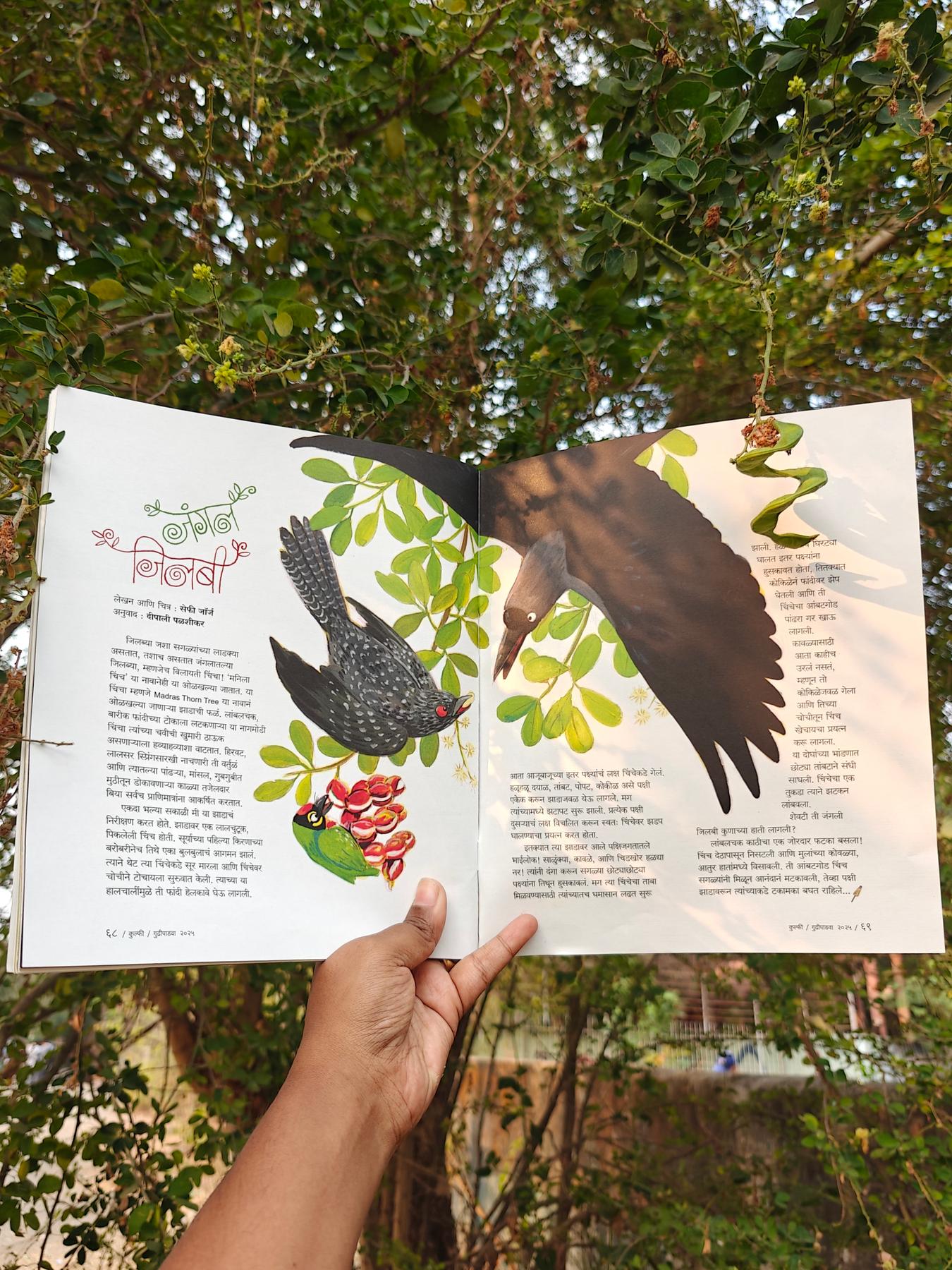
Over time, this practice extended itself towards botanical and wildlife illustration, which is what she currently does under her brand called the Summer Scribbles. Sefi says, “Illustration can shape how we perceive a species, allowing for a nuanced, attentive, and grounded representation than what we often encounter in mainstream media.” This instinct has grown into an intentional practice which is today central to Sefi’s professional work.
“Most of my work begins with rough sketches in my sketchbook,” Sefi explains. This essential stage is where Sefi gathers thoughts, asks questions, and puts ideas down without worrying about how they look. It is also where the research happens. She spends time reading about the species, habitats, or communities that she is working with.
Illustration is different from fine art. Sefi identifies that difference being ‘communication’. “While art can be personal, illustration needs to be understood by the viewer in the way it is intended,” Sefi elaborates. “So, I approach it as design, where clarity and meaning are as important as aesthetics.”
But like all art, Sefi also experiments. She explores different ways of depicting an idea, in traditional or digital mediums, often combining both. “My sketchbooks remain a constant—a space where I can test, fail, and explore freely before arriving at a final piece,” she says.
As a professional Illustrator, Sefi has been working with various clients for 8 years. “I have been through ups and downs, and I’ve only recently gained the confidence to say ‘no’ to projects that don’t excite me, or don’t offer a fair remuneration,” Sefi admits. “Often, people think that because I enjoy what I do, I should be honored to do it for free.” Sefi is a strong advocate for fair wages for creative professionals, and a big part of practicing that is to say no herself (“Finally!”).
Saying no allows her time to invest in her personal projects. “These are where I can experiment, follow my own curiosity, and take creative risks without external expectations,” Sefi says, adding that this is where her voice develops, and where she can explore subjects at depth. These projects also turn into assets for her Summer Scribbles.
The two constantly inform each other. Personal projects help build range and clarity, strengthening her client work, while client projects often introduce her to new contexts and challenges which feed back into her personal practice. Rather than seeing them as competing demands, Sefi views them as parallel processes that both, keep her work grounded and also helps it evolve.
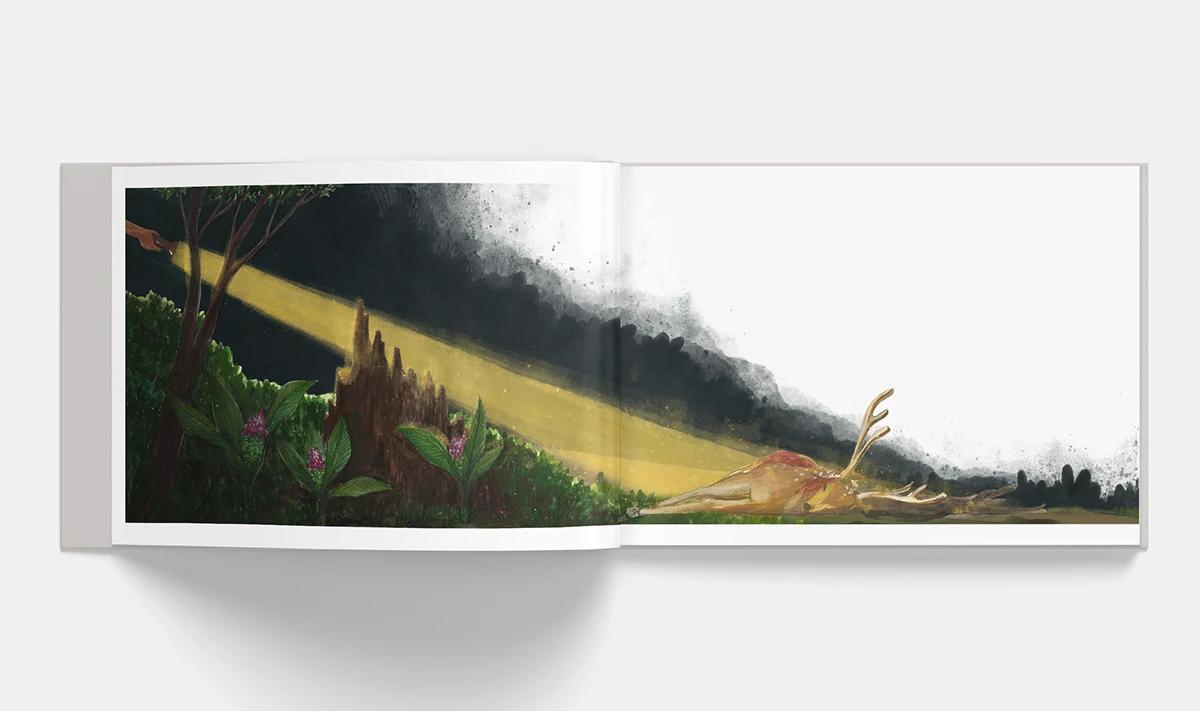
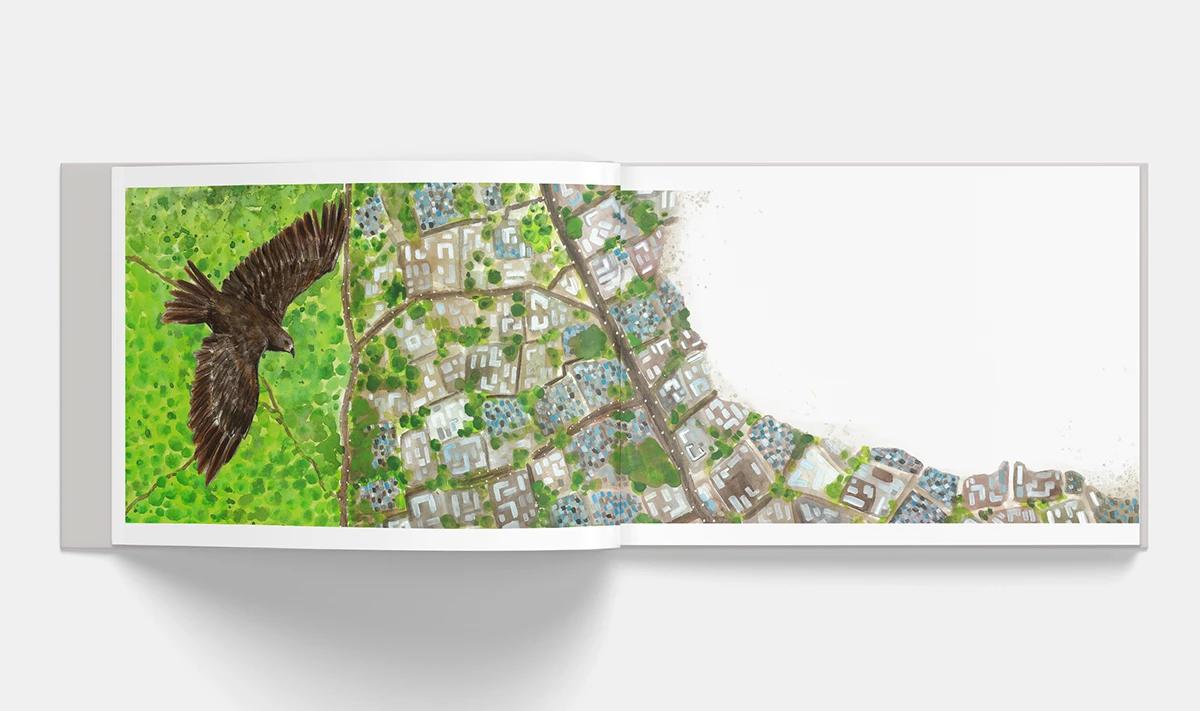
A key career moment for Sefi was working on the book Living with Leopards, which she illustrated for the Sanjay Gandhi National Park, Mumbai. It is a narrative that moves away from the dominant portrayal of Mumbai’s leopards as threats by the media, and instead presenting them as co-citizens who are living within the city and adapting in complex ways. “I began to see how illustration could shape perception,” Sefi mused. By focusing on their behavior, habitat, and everyday presence, her work painted a nuanced understanding of Mumbai’s leopards which shifted the conversation from fear to coexistence. This project highlights how anthropology and illustration could blend for a successful visual storytelling.
Sefi puts in a lot of work that is never seen on her social media towards nurturing her practice, including efforts to continue learning and staying connected. “I regularly join guided trails, spend time with naturalists and experts, both online and offline, and participate in conversations to deepen my understanding of nature. I also read extensively, across subjects, which feeds into how I think and work,” Sefi shares. Interestingly, she also takes an online art class for children, which acts as a weekly refresher and helps her stay in touch with how younger audiences engage, especially since much of her work is designed for them.
Sefi also has important lessons that come from her professional practice. “I have taken risks on projects that did not always work out: from unpaid work done for ‘exposure’ to clients who disappeared halfway. These experiences have made me much more intentional about communication, boundaries, and contracts!”
Despite these challenges, Sefi maintains that it has been rewarding to pursue this path. She says, “It allows me to explore, stay curious, and build a way of working that feels both sustainable and personally meaningful. I absolutely love what I do, and I’m grateful that I can follow my passion.”
MANALI HAWARE is an Indian artist based in Paris whose work examines subtle behaviors and personal gestures that shape how individuals interact with their surroundings. Her work investigates the dynamics and responses people have with various spaces, focusing on what constitutes a person’s comfort zone. Currently, her practice centers on repetitive gestures, establishing protocols, and concealing parts of herself within her art.
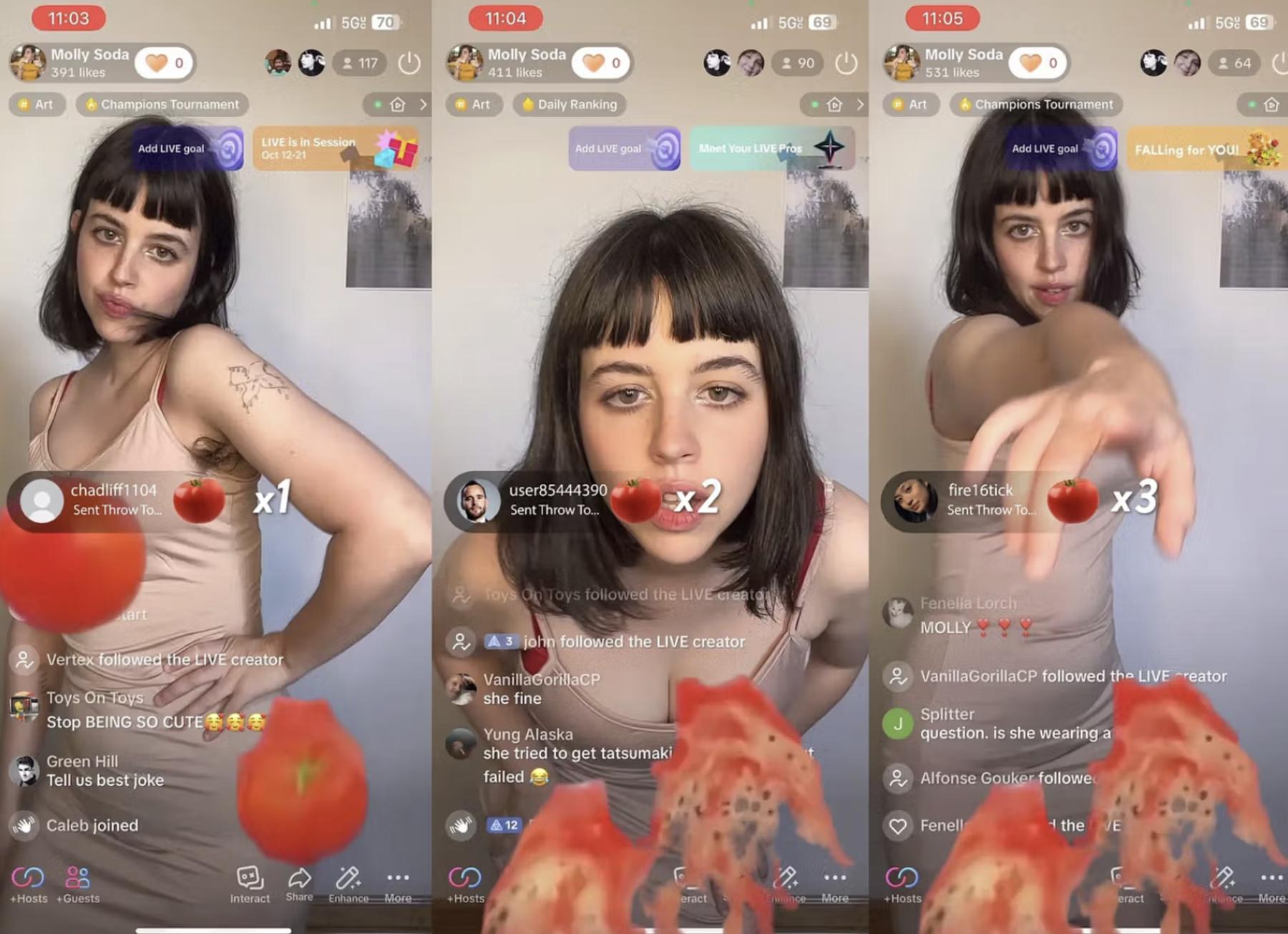
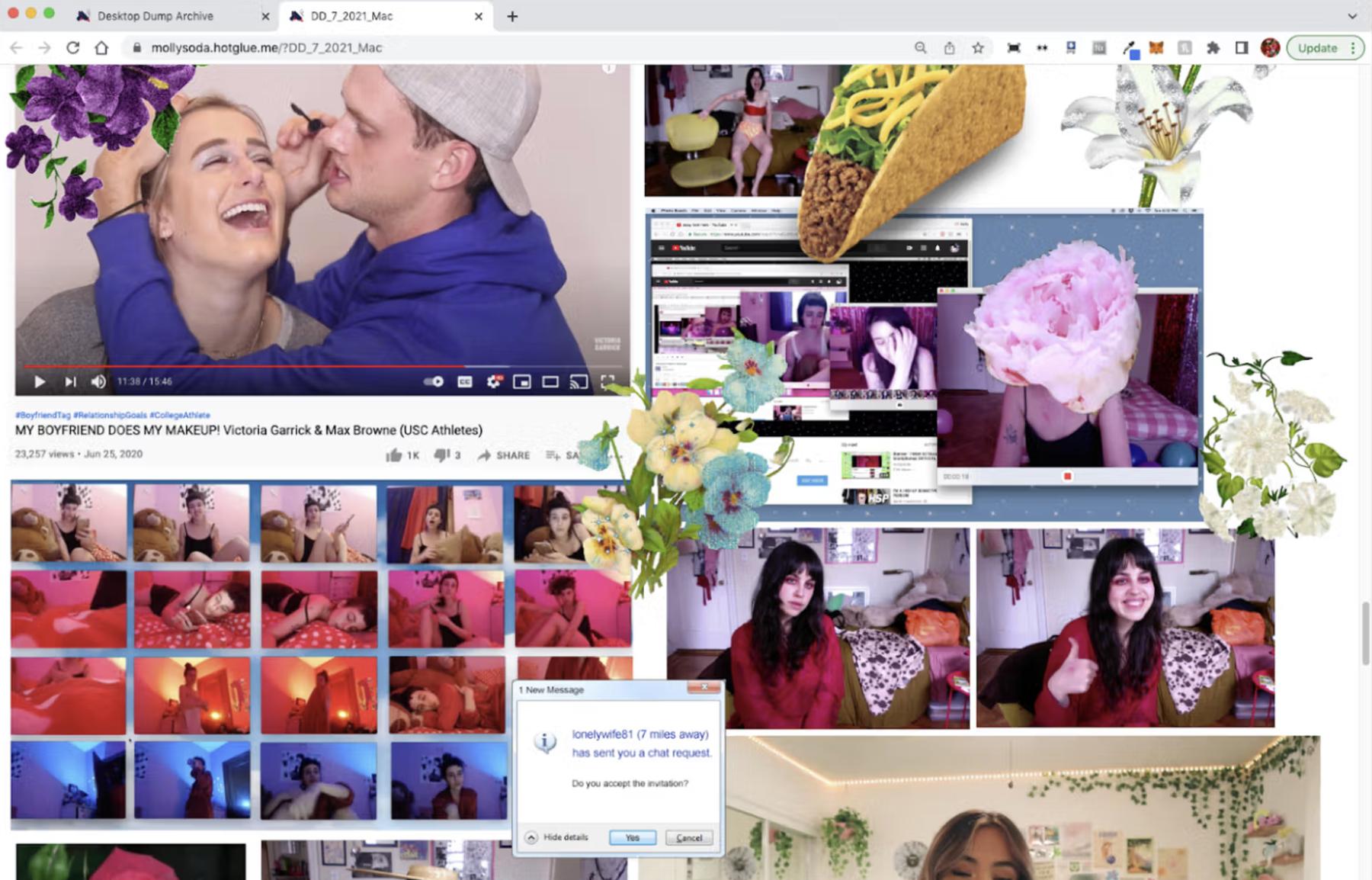
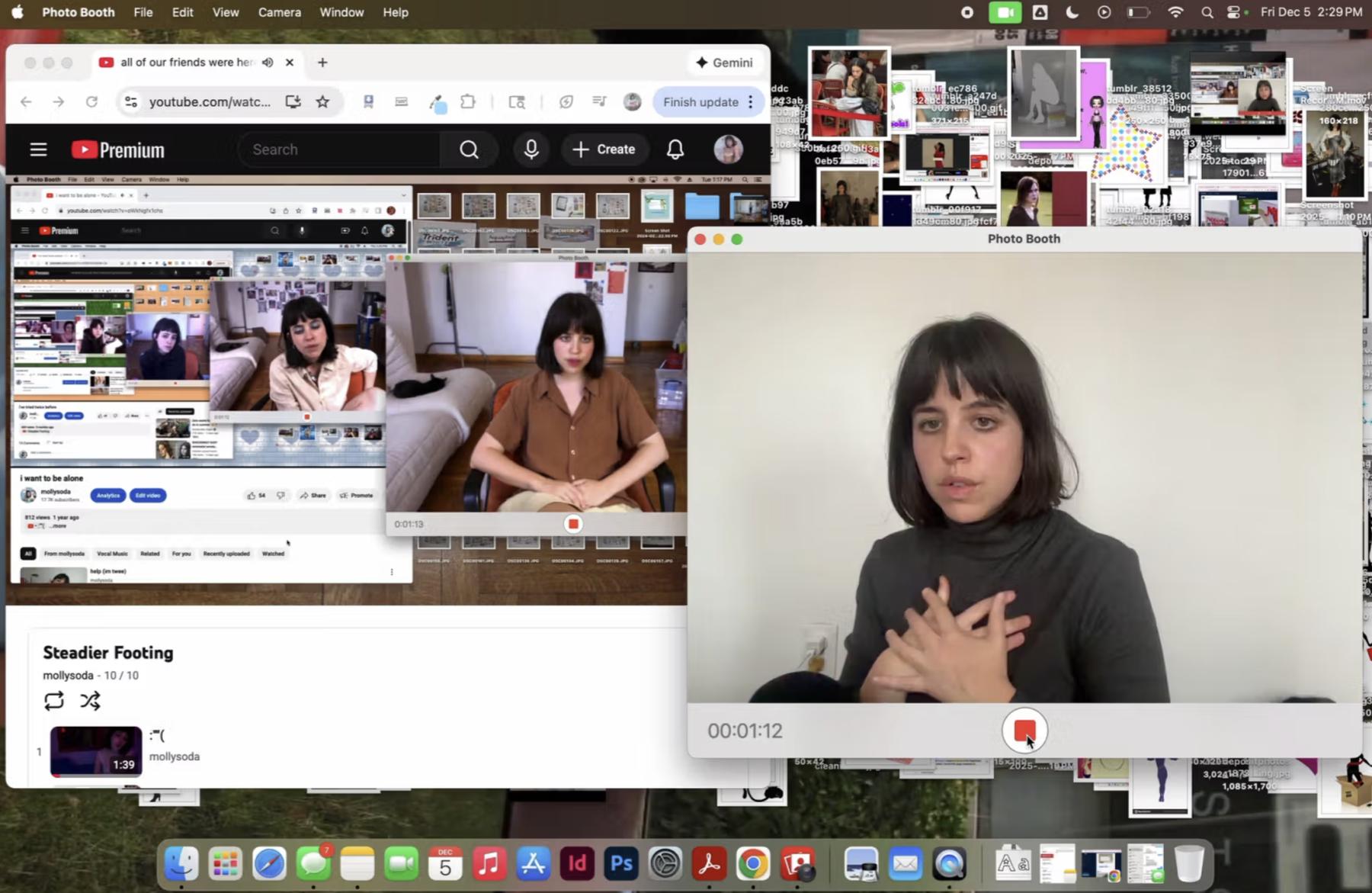
is a New York-based artist working across video, performance, installation, and web-based media. Her practice centers on online culture, self-identity, loneliness, and the desire to connect, using social media platforms as both medium and subject. Soda is an adjunct professor at NYU in New York City and has work in public collections at Centre Pompidou (Paris), Museum of the Moving Image (New York City) and the Thoma Foundation (Dallas, Texas).
KARI PAUL: I know you got your start on Tumblr and you make a lot of art surrounding the social media space. In your life, and in your practice, do you distinguish between being a user and being an artist? Did you always think of what you were doing as art, or was there a moment when you decided consciously to make a switch?
MOLLY SODA: For me, that’s a big part of my practice – this tension between user and artist, and where the line is. I do feel like it was a conscious switch, insomuch as I started thinking about it through an artistic lens. I grew up on the internet, so I was using the internet like everyone else when I was a teenager. It wasn’t until I was in school, when I started my Tumblr in 2009, that I realized there was a way for me to apply this space I was already comfortable in [to my art]. It has always been a learning process figuring out how to work within these networks and systems. In the beginning, I was still trying to figure out how to make those delineations. Some other artists are able to create boundaries around whatever it is they’re doing online. Whenever I tried to do that, it didn’t feel interesting to me–now, I’ve embraced that blurriness.
KP: I’m curious how you would characterize the ways the internet has changed since you started your career, and how that impacts your work.
MS: There have obviously been a lot of major changes. The giant [one] was when [the internet] went from this thing that you intentionally went to, and did in a specific room of your house, to when we started using smartphones and became constantly plugged-in. That was the first major shift–and I think about what that does to our relationships with ourselves, and each other.
Now we are at a strange turning point when it comes to how we connect online. It’s hard not to be depressed about it; it feels less connected [and more anonymous]. Though, I do think there is a freedom in anonymity that we’re going back towards, because people have so much anxiety about [our online] relationships and how loaded they are, and what it means to be looked at.
KP: I really appreciate the ways your work explores that tension between identity and vulnerability online, and I was wondering if you could talk about the idea of “cringe.” That word is talked about so much surrounding online posting. How does that relate to your work, and the idea of vulnerability on the internet? Do you think people are more afraid to be “cringe” now?
MS: I think so. In a lot of ways, to be cringe is ultimately a failure to move people. There is something happening there where it is an emotional call to action, or something you are seeking from a post – but you fail to succeed at whatever that goal is.
There is also something about trying. To be cringe is to try at all. We are rewarded on a certain level in culture for effortlessness. Not just online, but the internet exacerbates any issues that we have in the real world. There’s always a reward for being beautiful without trying, for being rich without trying, for being talented without trying.
“Cringe” is sort of the aspect of seeing someone try. And in a sense, the internet is prime for showing us the “backstage” – there’s this collapsing of private and public that happens. There is a way that we show more vulnerable, intimate things. But even the backstage has been honed and twisted into something that also needs to be perfected and effortless– it is actually so, so, so laborious to appear natural. That is something I’m very interested in: peeling back the layers to show that we are all trying very hard, but we don’t want it to appear that we are trying, because we get punished if we try too hard.
KP: There’s a desire for authenticity, but also a fear of earnestness, or critique.
MS: Exactly, and that is what is so interesting to me.
KP: Where are you based now? Do you think where you’re based as an artist is important to your career, or do you find you can work from anywhere?
MS: I think it’s important, but it also depends on what your goals are. There are so many ways to be an artist, so I don’t think the answer to that question is the same for everyone.
I’m in New York, but I have spent a lot of time not being in New York. I spent time in Chicago, I spent time in Detroit. I always felt like because I was making work digitally, that it didn’t matter [where I was]. But actually, I think it does matter, for me specifically and for a lot of young artists, because you want to be looking at art in person. You want to be meeting people. You want to have community, and other artists, and people to collaborate with and give feedback to. So for me, it’s important to be here, specifically. Though I think there are a number of great places–I don’t think everyone needs to move to New York.
KP: As someone exploring the new media art world, I am always curious how intangible work is displayed and sold in gallery spaces. Do you feel like galleries are able to accommodate that?
MS: No. I don’t think New York galleries have, because the New York market still does not know what to do with non-physical work. That’s fine, I didn’t become an artist to be a market artist–if I did, I would have made different decisions in my career. But I think it is difficult to display. You have to really consider how it is being aided in the way you display it. If it’s a digital-born, or digital native piece, what are we gaining from seeing it in person? How does that complicate the piece? What is the best way to show it?
KP: Related to the intangible nature of digital works. If you were to do a retrospective, would you still have all of your work?
MS: I don’t think I would show everything, but there are things that endure. There’s work of mine I still really connect to, or it feels really relevant. The thing about, you know, being an artist and the question that I’ve been asking myself a lot is, what makes Molly’s work Molly’s work? What are the works that feel like Molly’s work, and what are the works that feel like I was maybe responding to like a moment in time – that don’t feel like Molly’s work? What is the affective tone that’s like coming across all of this, what’s the thread? And so for me, it would be more about that, as opposed to like, trying to be exhaustive.
KP: That makes sense – I feel like, since I switched from full time journalism to art, I’ve just been experimenting with every possible thing, and I don’t know what is going to stick.
MS: And I think that’s the other thing – we tell ourselves that we have to know right away. I always tell my students this: you don’t have to be a genius. But I think with the internet there is an anxiety that our work is already out there, and I’m not sure that is a good thing.
KP: Again, people want it to feel effortless somehow.
MS: I’m anti-effortless.
KP: Embrace the cringe.
KARI PAUL is a journalist, artist, and filmmaker whose work focuses on memory and materialization in the digital age. Drawing on a decade of reporting on technology and privacy for The Guardian, BBC, The Wall Street Journal, and VICE, her practice transforms ephemeral social media data into textile-based archives, exploring the construction of online identities and challenging platform control over personal histories. She is the director and producer of award-winning documentary short HANK.
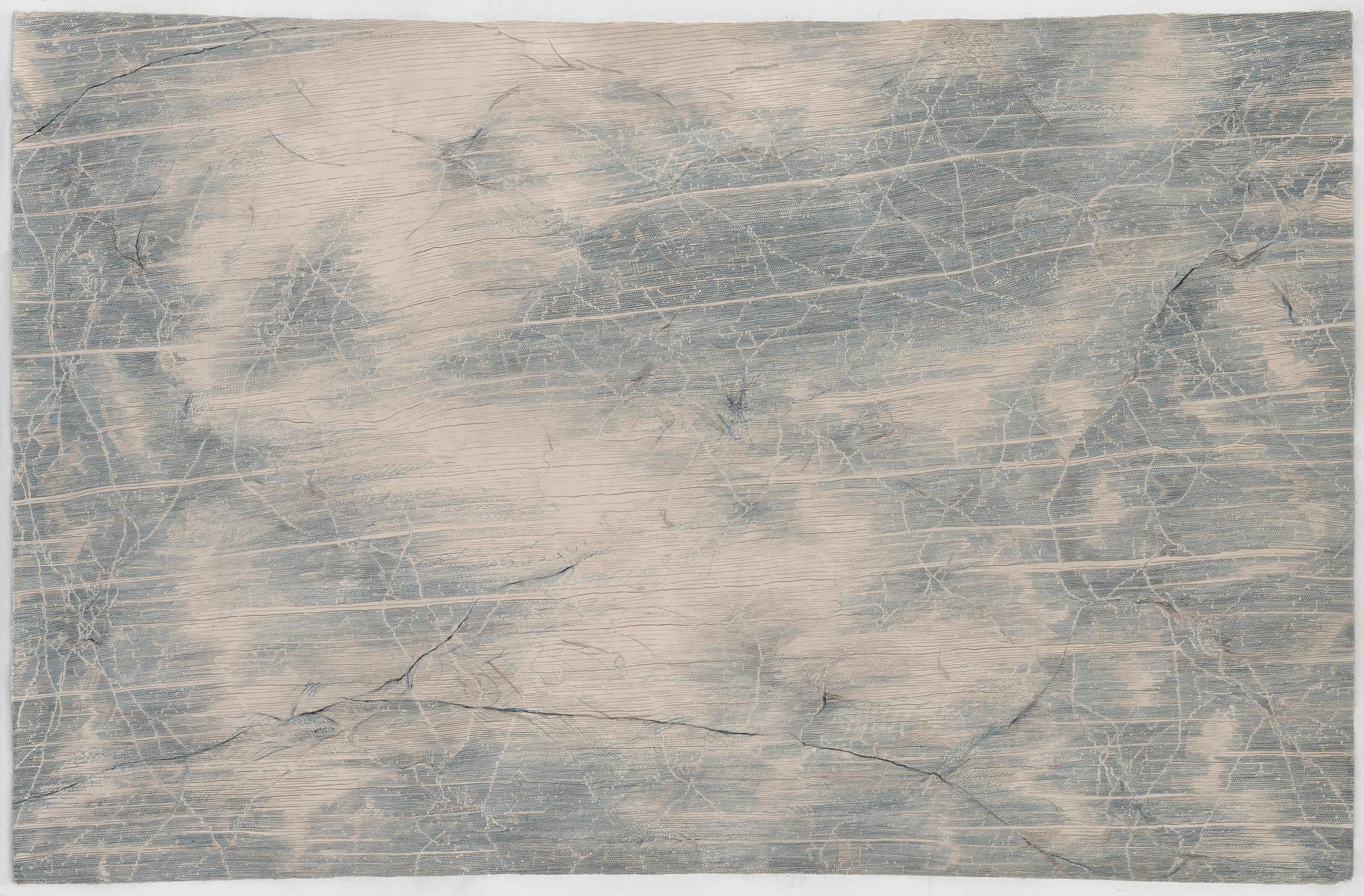
is a Japanese-born artist based in Berlin whose work explores the space between writing and drawing. Influenced by Japanese calligraphy, his practice centers on gesture, line, and the physical act of mark-making. Working primarily on paper, he creates compositions that balance control and spontaneity, where each line records movement, rhythm, and time. His work reflects an ongoing dialogue between Eastern and Western traditions, engaging with ideas of language, translation, and cultural exchange. Nakahara has exhibited internationally as part of a broader contemporary approach to drawing.
Kaylyn Murphy: Your work brings together influences from Japanese calligraphy and contemporary drawing. How has this background shaped the way you approach your practice today?
Kazuki Nakahara: My early experience with Japanese calligraphy, which I learned from my father and grandfather, laid the foundation for my understanding of the movement of lines. Today, this understanding has evolved not only into drawing regular, repetitive pencil lines on paper, but also into improvisational performances with a dancer or dancers.
KM: In your artist statement you describe your work as existing “between writing and drawing, between East and West.” How has living and working in Berlin influenced this dialogue within your practice?
KN: When I came to Berlin 2005, the city was not developed as today and many foreign cultures were mixed. Many artists from around the world had expressed themselves with their own background, gender, their differences and diversity were already marked in this city. Living in such a place as Berlin was stimulating and has led me to reflect on my own cultural background and identity. I began to look back at the roots of my interest in Japanese calligraphy techniques, discipline, and spirituality.
Then I studied experimental drawing in the class of Hanns Schimansky, who specialized in contemporary drawing at the Weißensee Academy of Arts Berlin. We explored the idea of expanding the concept of “drawing.” Specifically, we considered the notion that all human activities—such as walking, singing, sewing, and praying—contain elements of “drawing” or hold the potential for it. In this process, I revisited the act of “writing,” focusing on whether it is possible to express this as “drawing,” as well as on the relationship between drawing and calligraphy. I also engaged in research about primitive writing systems—such as those found in ancient cave paintings—from the period before written characters were established.
KM: Looking back at your career, were there any early exhibitions, mentors, or opportunities that played a key role in helping you gain visibility as an artist?
KN: I came to Dresden in 2004 to study art. Before that, I had studied economics and a bit of German as a foreign language. However, I failed the entrance exams at five or six art universities in Germany. After that, I attended a drawing class taught by Professor Hanns Schimansky at the Weißensee Academy of Arts Berlin. His drawings appealed to me deeply because he worked with black ink on paper—it reminded me of Japanese calligraphy. I immediately spoke to him and told him how impressed I was and that I would love to study under him. That was my last chance to change my way to the art—and it worked! If it hadn’t worked out, I would have returned to Japan and might have worked at a Japanese bank! This encounter with the professor, and my first success in art, is my answer.
KM: How did you first begin working with galleries, and what do you think makes a strong and productive relationship between an artist and a gallery?
KN: I met Inga Kondeyne, a Berlin-based gallerist who has been running a gallery specializing in drawings since 1980, at an open campus event at the art university. After holding my first exhibition there with the renowned artist Eve Aschheim at her gallery in 2009, while I was still a student, we decided to begin working together.
KM: How have you seen the market for drawing evolve during your career, and how has that affected your practice or opportunities as an artist?
KN: Until a few years ago, there was a view in the art world that traditional craftsmanship was in decline as digital technology and artificial intelligence became more widespread. That is true. However, it is now a fact that drawing by hand —its counterpart—and the primal, sensory art that digital technology cannot replace are being rediscovered. For this reason, I think the European drawing market has become more active over the past decade. In particular, art fairs specializing in drawing—such as Drawing Now in Paris, Paperpositions in Berlin, and Art on Paper in Brussels—have become firmly established. This seems to reflect a more casual trend of acquiring affordable drawings by emerging artists rather than purchasing expensive works at large art fairs.
KM: When preparing for an exhibition, how do you balance your own vision for the work with input from curators or galleries?
KN: When I finish creating a piece in my studio, I can’t immediately view it from an objective perspective. Unless some time has passed, I still can’t judge how it will appear to an audience or whether it’s a good drawing or a bad one. On the other hand, curators often select works and offer advice on exhibitions from an objective perspective, taking into account factors such as the venue, the physical space, the community, and art collectors around the galleries. Therefore, communication with the curator is extremely important when preparing an exhibition, and I think it is necessary to maintain a certain balance between subjective and objective viewpoints.
KM: You have exhibited internationally in a variety of contexts. Have you noticed differences in how audiences or art markets respond to your work in different places?
KN: I think that the way people perceive art varies depending on the individual, the country, and the cultural background. To give one example, the interpretation of empty space—a frequently seen element in my drawings—differs between Asian and other countries. Empty space is not merely an area left unpainted; it embodies the philosophical concept of emptiness. In Japanese or Chinese aesthetics, it is precisely because of this “emptiness” that viewers are able to imagine something and let their associations extend freely.
KM: What has helped you sustain your practice professionally over time?
KN: In my artistic practice, I think it is important to notice and enjoy even the smallest changes. Even when simply drawing a single line with a pencil on paper, that line can vary depending on the time and place.
Light, temperature, and state of mind while drawing all transfer from my hand to the pencil, and through interaction with the paper, subtle variations naturally emerge in the line. Drawing is life itself. For example, as we age, our hands may tremble, causing these lines to become unstable.
However, rather than viewing this as a weakness, we can accept the unique quality inherent in those lines and cultivate a new sense of balance that differs from before. I don’t believe there is such a thing as failure or success in the practice of art. What matters is to keep going—and whether we can find joy even in the slightest of changes.
KAYLYN MURPHY lives and works in Paris, France. Her drawings are created in dissociative states, exploring how memory and affect overlap, dissolve, and transform over time. She works through gestures shaped by shifting states of awareness, allowing marks to emerge as traces of psychological movement. Working within conditions of duration, white noise, and hypnopompic states, the surface becomes a site of return, where fragmented moments reassemble and shift in meaning. Murphy observes how consciousness moves in relation to the present, mapping patterns that arise within these conditions as perception loosens and reorganizes.
Gresham Cash aptly concludes this edition with an excerpt from his interview with artist, Lucy Orta.
Lucy Orta creates socially engaged art exploring body, community, and survival through textiles, performance, and collaboration, empowering marginalized groups via participatory, sustainable practices. She often collaborates with her partner, Jorge Orta, as Lucy + Jorge Orta.
Gresham Cash: As the older person in Lillian’s class, I proposed that I would like to talk to somebody about having a family and being an artist and how that actually works. Because I’ve just had my first child with my wife. She’s a beautiful girl named Auden. We’re living in Paris now. My wife’s a filmmaker and I’m an artist. So, I was admiring you and your partner’s ability to work together for so long on so many diverse projects. And I was just hoping to get a few words from you about the challenges of this. Do you have suggestions for how an artistic couple can navigate life once a child enters the mix?
Lucy Orta: I don’t know whether it’s advantage or disadvantage, being an artist, being both artists. And it sounds like you and your partner are artists. You know, we don’t necessarily have obligations, going to work at nine and coming back at six in the evening. So there’s flexibility in the arrangement. And I think that’s been the most important part of raising the child is to be able to share that.
Although, of course, it comes with a lot of difficulties because we don’t have a fixed income; and there’s stress; and the constant anxiety about being able to care for this child, this being that’s come into the world and you’re now responsible for.
But I think the aspect which was the most difficult for us was the international profile and having to deal with the demands of that–on keeping the profile active, being responsive to exhibitions or commissions or opportunities that come along. Of course, that’s our income and that’s how we care for our family. I think one of the big advantages of being in France is that there are support systems for families, particularly for women. There’s also assistance, aid, and support for artists. When I had my first two children there was no maternity leave, it was absolutely impossible to not go back to the job the next day. But these days as a freelancer, self-employed person, or an artist, the Maison des Artistes and Urssaf now offer pathways through financial support during that period. So I mean the practicalities of that are really significant.
In terms of raising kids in Paris, the support system, the creche, the nursery arrangements are reasonable and at the time I think they were means tested which means that they’re based on your household income and the cost of it is reduced and that’s hugely significant if you compare that with the US where there’s nothing. It’s exorbitant and it’s not worth the family working or one member of the family working. It’s actually financially better for one family member to stay at home rather than to send their child to a creche. So, those are really difficult decisions to make but it also depends on your professional trajectory as an artist and if you want to give something up in favour of caring for the child as opposed to taking it to nursery. On the other hand, I think the nursery experience for all of our children was incredible. The services are high quality. Also, the au pair system in France is fantastic. There are legal routes to employing au pairs. At the time it was informal, now it’s become formalized, which is great. And so, take advantage of that because so many people can benefit, both the au pair and the family.
I’m thinking holistically in the environment that we are in France–how cared for we are as carers of our family and children. I’m not sure about the other care sectors. Well, it certainly already seemed very complete in France.
GC: My wife’s just started to add some work: emailing and getting back on board as a director. And even just having a little help a few times a week, that’s very affordable. Our friends at home can’t even imagine.
LO: There are even more systems set up now with different media platforms and apps that are available. There’s a legalized system now in order to support workers, home workers, and informal workers that didn’t exist before.
GC: But I suppose when you were starting your family and were doing big art projects and you were based in France, the UK was still a part of the EU, correct? What’s your advice in general for our pretty international group of students? If you feel like France, as an example, is the place to be as an artist and you find your resources here and you find your people here and you start to understand the network here.
LO: Jorge deliberately left Argentina because it was a career choice. And as far as Europe, I don’t know whether Paris was the best place to be at the time. A lot of Argentinian artists went to the States and other places, but I don’t think we fully navigated the French system because a lot of our work is international. But then in France, there is a state support system for artists, and artists can be quite comfortable within that system if they do know how to navigate it. I know it doesn’t exist in the States. But yes, there are advantages and disadvantages to being in France.
I think as foreigners we sit comfortably in and out of both of those systems. We do have the potential to have international careers because we have networks in other countries and also because we’re fluent in English. Notwithstanding that’s the lingua franca across the world in terms of the arts. Even if we’re decolonizing, it’s still present.
A special thanks to Jamika Ajalon, The American Library of Paris, Dallas Athent, Baptiste Audousset, au_passage, Backslash, Golnaz Behrouznia, Steve Bisson, Andrea Camaliche, Johanna Carrier, Malik Crumpler, Lillian Davies, Veronique Devoldere, DOC, Rebecca Dolinsky, Lala Drona, Raphael Emine, Mary Flanagan, Sefi George, Candela Gonzalez, Amorelle Jacox, Damini Kulkarni, Tarun Kumar, Lafayette Anticipations, L’AiR Arts, Loïc Le Gall, Kazuki Nakahara, Mila Ovchinnikova, Marine Pagès, Christine Rebet, Almine Rech Gallery, Elene Shatberashvili, Erica Schreiner, Maria Silchenko, Molly Soda, Nina Strand, Joanna Wlaszyn, and Alicia Zaton.
All images copyright of respective artists.